
They march like a procession of arches frozen mid-step, vaulting across landscapes, carved into cliffs, and threading through forests and fields. The Roman aqueducts are not just beautiful, not just historical curiosities, they are breathtaking marvels of engineering originality and brilliance.
In the age before pumps and pressure valves, Rome built a world running on water: public baths, fountains, latrines, gardens, barracks, and luxury villas. To feed them, the Empire built infrastructure so advanced and exacting that parts still function today and much still stands.
The aqueducts are Rome’s quiet epic: not temples to gods, but temples to civil order, engineering, and endurance. They speak to the remarkable innovation born in minds of men for whom ingenuity, scholarship, and problem-solving became a calling at civilization’s dawn.
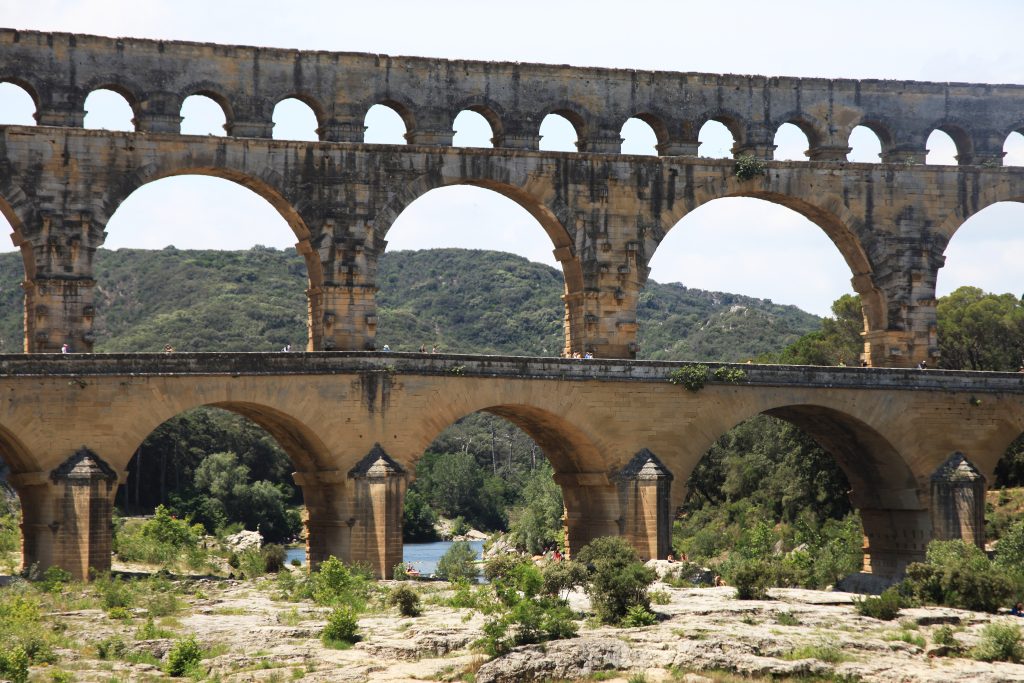
How Roman Aqueducts Worked
Roman aqueducts were constructed to carry fresh, clean, cold water from springs or mountain sources, sometimes over 50 miles away, to the cities they served. They were feats of extraordinary engineering and mathematical brilliance. At the height of its power, Rome was supplied by 11 aqueducts carrying over 200 million gallons of water daily. This was hygiene, imperial theater, civic pride, and Rome’s declaration of control over nature.
Their core principles of aqueduct building included:
- Gravity-fed design: Aqueducts relied entirely on gravity, with a very gradual and precise slope, often just a few inches of descent per hundred feet.
- Covered channels (specus): The water flowed through stone conduits, often underground, but where valleys interrupted the terrain, bridges were built.
- Arches and arcades: To maintain the slope over varied terrain, Romans used soaring arcades, tiers of arches that remain among their most beautiful and visible legacies.
- Materials: They used pozzolanic concrete, brick, and ashlar stone, materials that could flex with time and weather while resisting erosion.
- Maintenance: Special aqueduct workers (aquarii) cleaned, repaired, and regulated the flow. Cisterns and settling tanks removed silt before water reached its destination.
The construction of Roman aqueducts was a triumph of precision, manpower, and ingenuity. Builders employed wooden treadwheel cranes, enormous vertical wheels powered by workers walking inside them, to hoist heavy stone blocks and curved voussoirs (wedge-shaped stones) into place, especially when assembling the soaring arcades that bridged valleys.
These cranes, combined with timber scaffolding and pulley systems, enabled careful placement of each arch’s keystone, locking the curve without mortar. Centering frames, wooden molds that supported arches during construction, stayed in place until the final keystone stabilized the structure. Once complete, the aqueduct’s water channel, or specus, was lined with waterproof mortar (opus signinum) and gently sloped to maintain continuous gravity-fed flow. The combination of architectural elegance and logistical mastery remains one of Rome’s most remarkable engineering achievements.
Who Actually Constructed the Aqueducts?
The construction of Roman aqueducts involved skilled craftsmen, enslaved laborers, soldiers, and engineers, with each group’s role determined by the project’s scope, location, and imperial priority.
Skilled Craftsmen and Engineers
The design and supervision of aqueducts fell to trained Roman engineers (architecti or agrimensores), who typically worked under the curator aquarum, Rome’s official water-supply administrator. These engineers oversaw surveying, excavation, materials handling, and hydraulic precision. Alongside them, skilled and often free stonecutters, masons, and carpenters were hired or contracted to construct arches, vaults, settling tanks, and conduits. Roman architects like Apollodorus of Damascus, famous for designing Trajan’s major projects, represent the high end of the profession.
Enslaved Laborers and Forced Workers
Much of the manual, repetitive, and backbreaking work, digging trenches, moving stone, mixing mortar, hauling materials, was carried out by enslaved people, especially in larger, state-sponsored projects. In some cases, enslaved labor came from prisoners of war, forced into mass labor during Rome’s expansion. Enslaved workers might also belong to the state or to contractors managing construction sections.
Military Labor
In frontier provinces or during major military campaigns, Roman legionaries themselves sometimes built aqueducts, particularly where the structure served a military outpost or colonial town. The legions were trained in both combat and construction, and their disciplined labor built aqueducts, roads, and forts.
Still Standing: The Great Aqueducts You Can Visit Today
Though many aqueducts fell into ruin after the Empire’s collapse, several still stride across the modern world as majestic survivors of time, empire, and erosion. Here are the most remarkable.
- Pont du Gard (France)
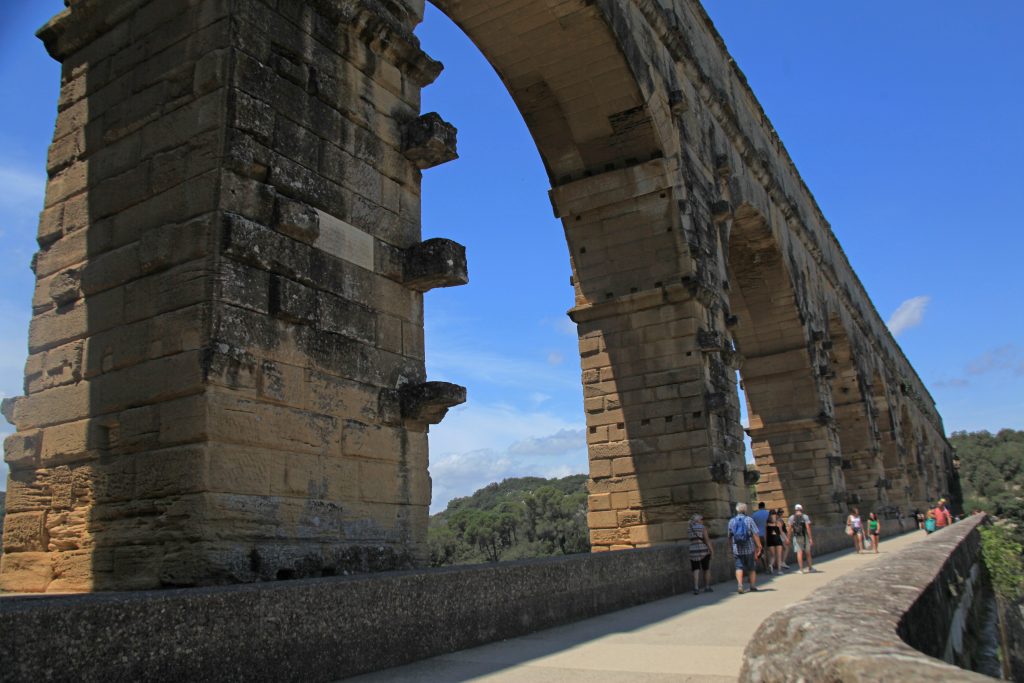
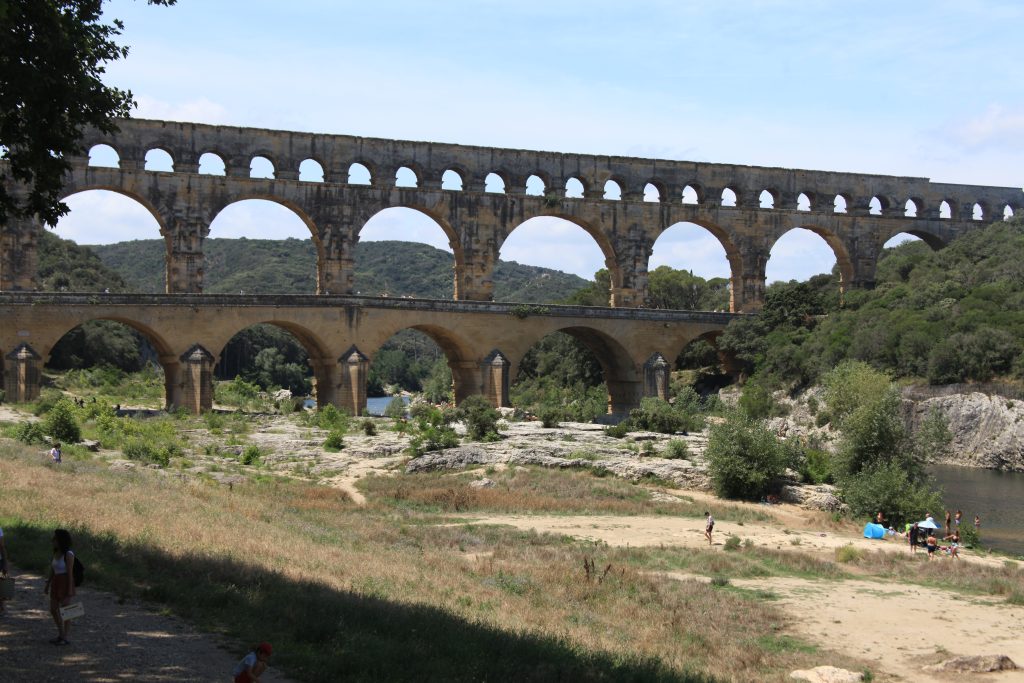
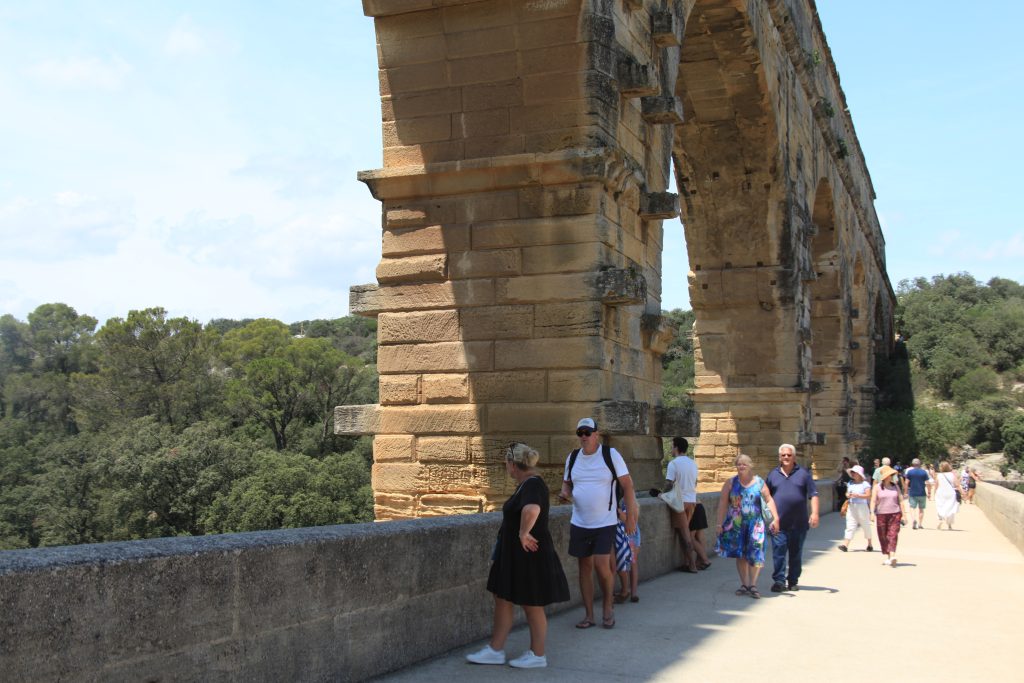
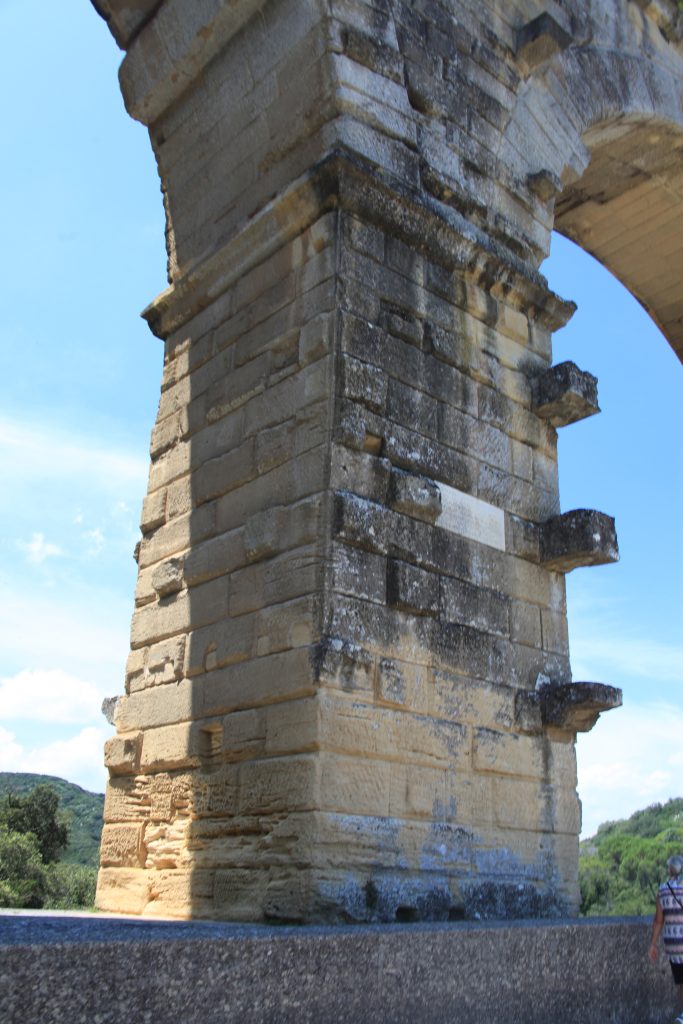
Rising above the Gardon River in southern France, the Pont du Gard is the best-preserved, and most visually arresting, Roman aqueduct still in existence. Built in the first century CE, it was part of a 31-mile system that brought water to the Roman city of Nemausus (modern-day Nîmes).
Its most striking feature is its triple-tiered arcade, soaring 160 feet high and stretching across the river valley in honey-colored limestone. The precision is astonishing: the blocks were fitted without mortar, yet they’ve held for two thousand years.
Today, it’s a UNESCO World Heritage Site and a rare place where you can still walk across the top, tracing the flow of ancient water with your own footsteps.
- Segovia Aqueduct (Spain)
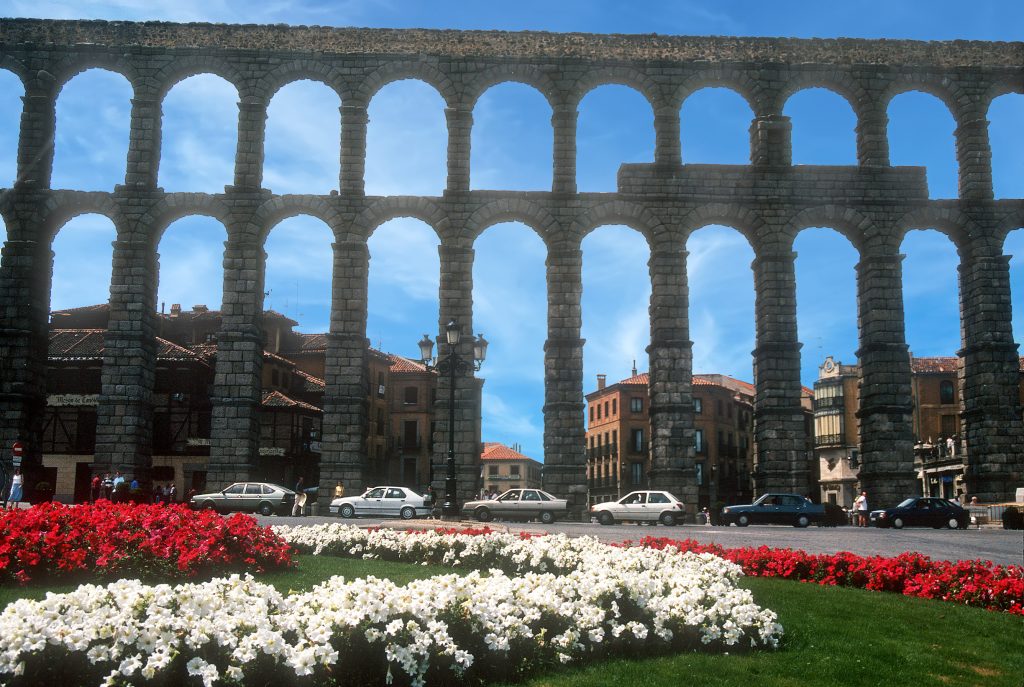
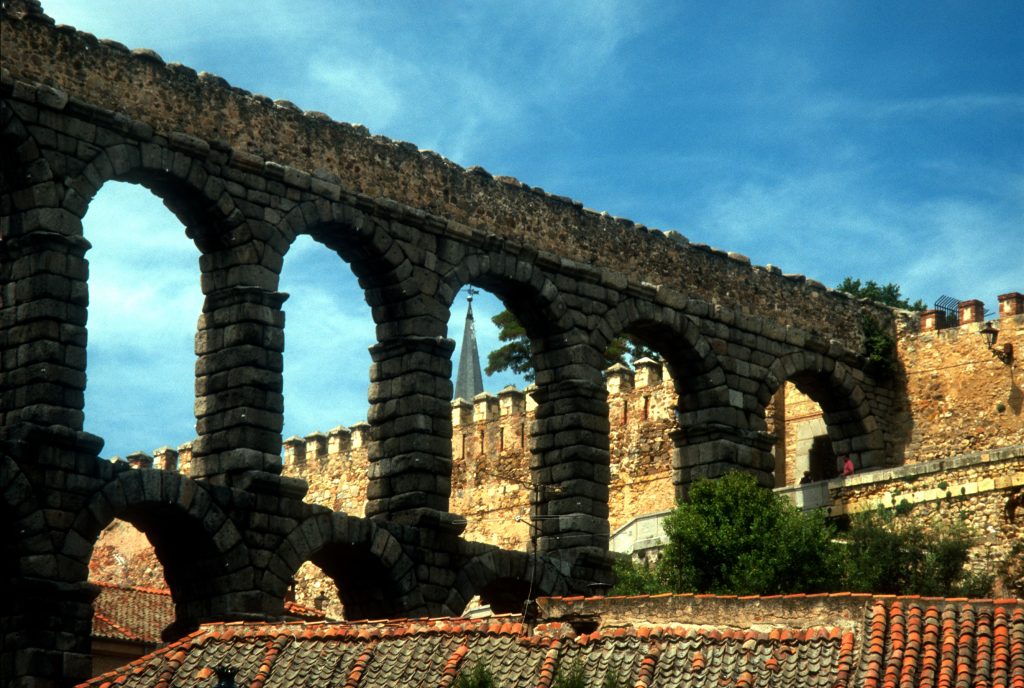
No Roman structure dominates a modern town quite like the Aqueduct of Segovia, which marches through the center of the Spanish city with almost impossible dignity.
Dating from the late 1st or early 2nd century CE, the aqueduct once carried water from a spring over 10 miles away. Its visible portion features 167 arches, built entirely from unmortared granite blocks, rising up to 92 feet at the tallest point.
Used for centuries, well into the 19th century, it is both a marvel of balance and a symbol of civic resilience. The aqueduct remains a focal point of Segovia’s identity, etched into coats of arms, legends, and everyday life.
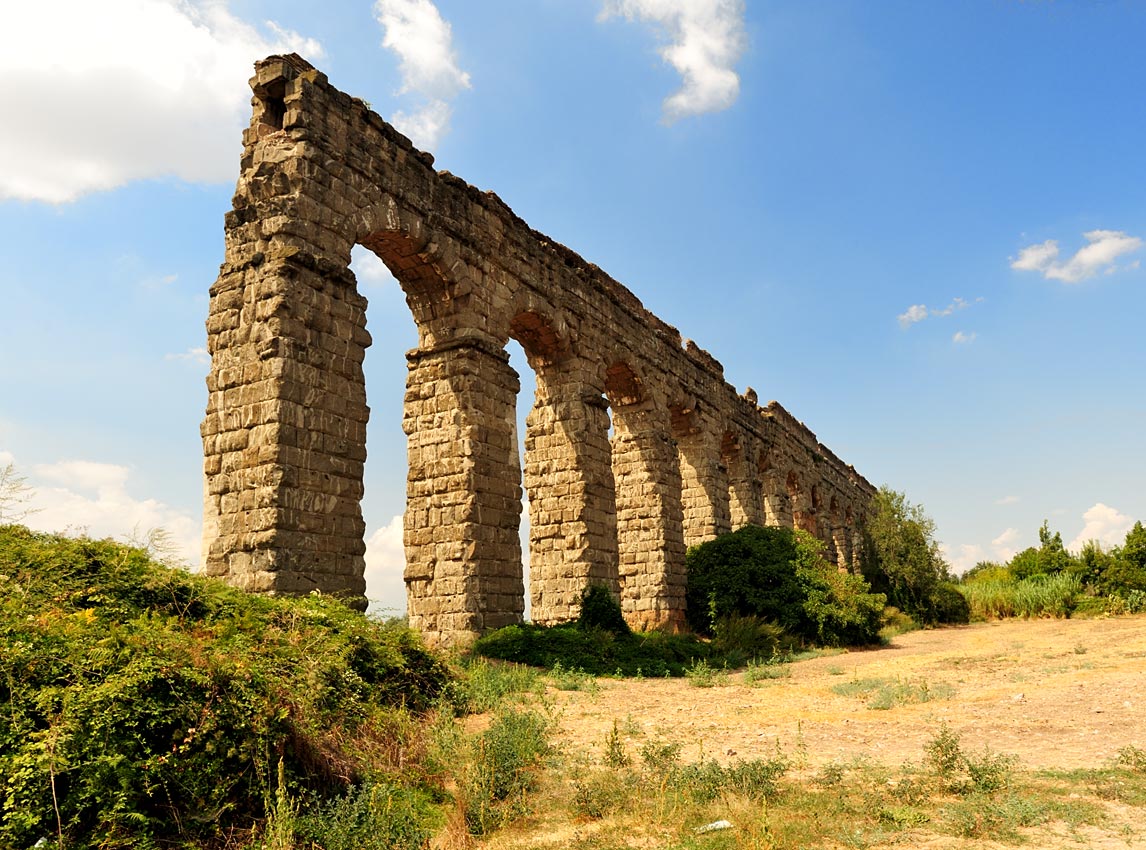
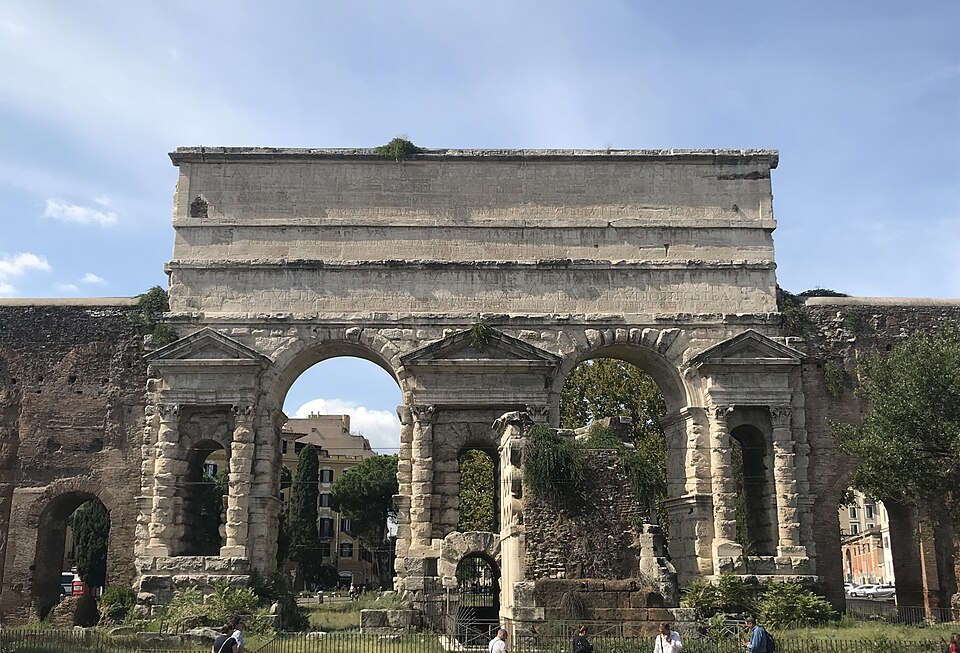
- Aqua Claudia and Aqua Anio Novus (Rome)
Of the many aqueducts that once served the city of Rome, the most visually commanding are the remains of the Aqua Claudia and Aqua Anio Novus, completed in the 1st century CE under Emperor Claudius.
You can see their haunting ruins striding across the Parco degli Acquedotti, part of the Appian Way Regional Park just outside Rome. Here, massive arcades rise from meadows and frame the skyline, silent witnesses to the hydraulic lifeblood of the ancient capital.
In some areas, modern aqueducts run beside or even within the ancient structures, continuing the tradition of Roman water management in spirit and form.
- Valens Aqueduct (Istanbul, formerly Constantinople)
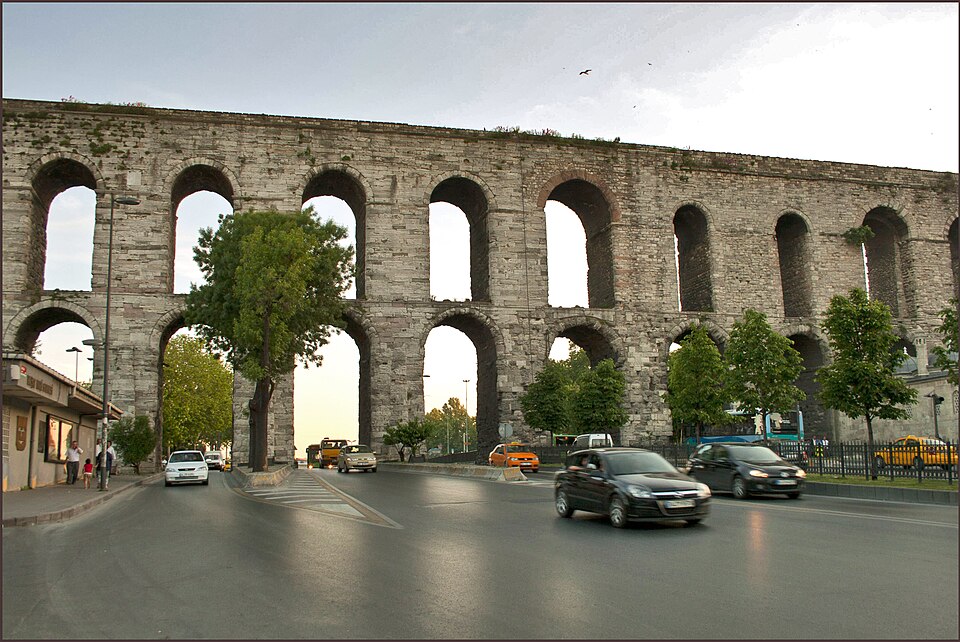
Built in the 4th century CE during the reign of Emperor Valens, this aqueduct brought water to the new imperial capital of Constantinople. Its impressive arcade stretches over a modern boulevard in Istanbul, once the key artery of a vast underground cistern and water storage system.
Though partially dismantled, sections of the Valens Aqueduct were used well into the Ottoman period, making it one of the longest-serving Roman aqueducts in continuous use.
- Zaghouan Aqueduct (Tunisia)
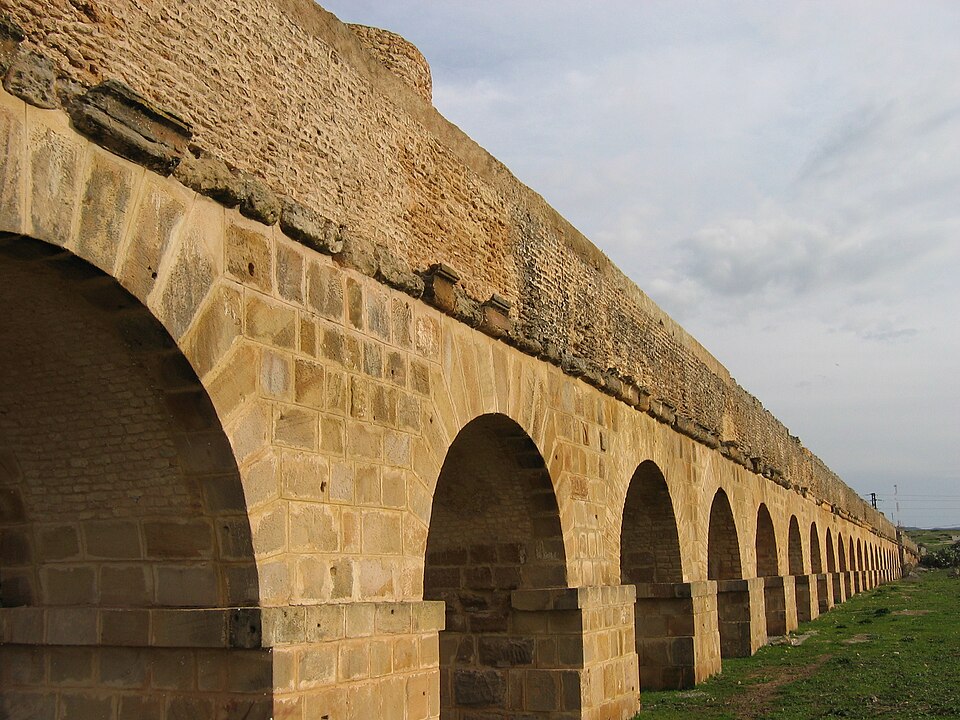
Built under Emperor Hadrian in the 2nd century CE, this aqueduct stretched over 80 miles to bring water from the mountains near Zaghouan to the North African city of Carthage.
Sections still stand amid the olive groves and arid plains of Tunisia, a testament to Roman ingenuity in hostile environments, and the reach of imperial infrastructure into the far corners of the Mediterranean.
Honorable Mentions:
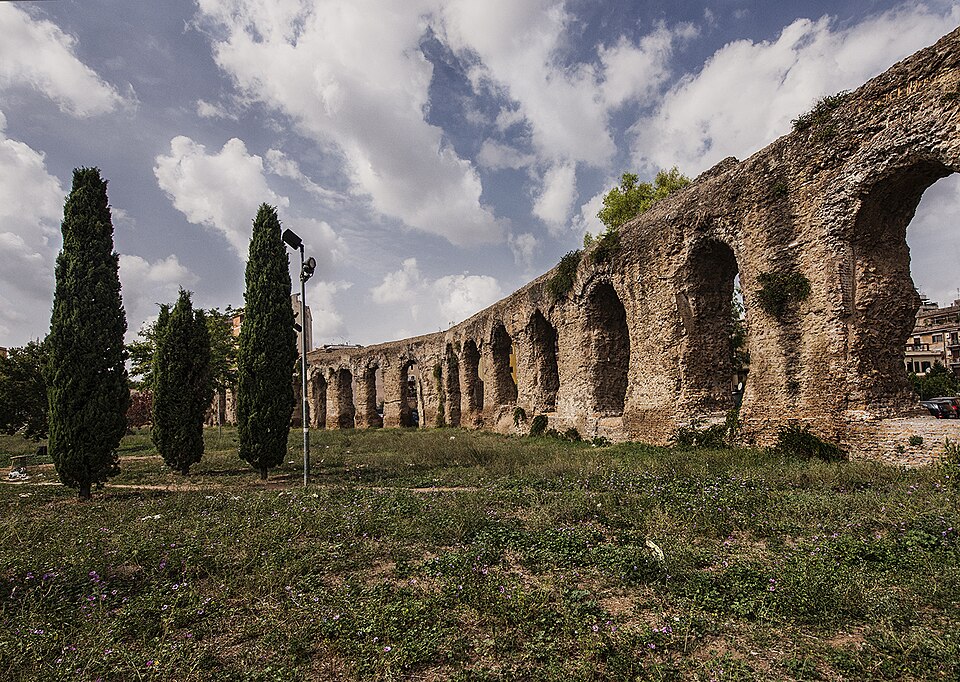
- Aqua Alexandrina (Rome): Tall, narrow arches cutting through Rome’s suburbs, dramatic and lesser-visited.
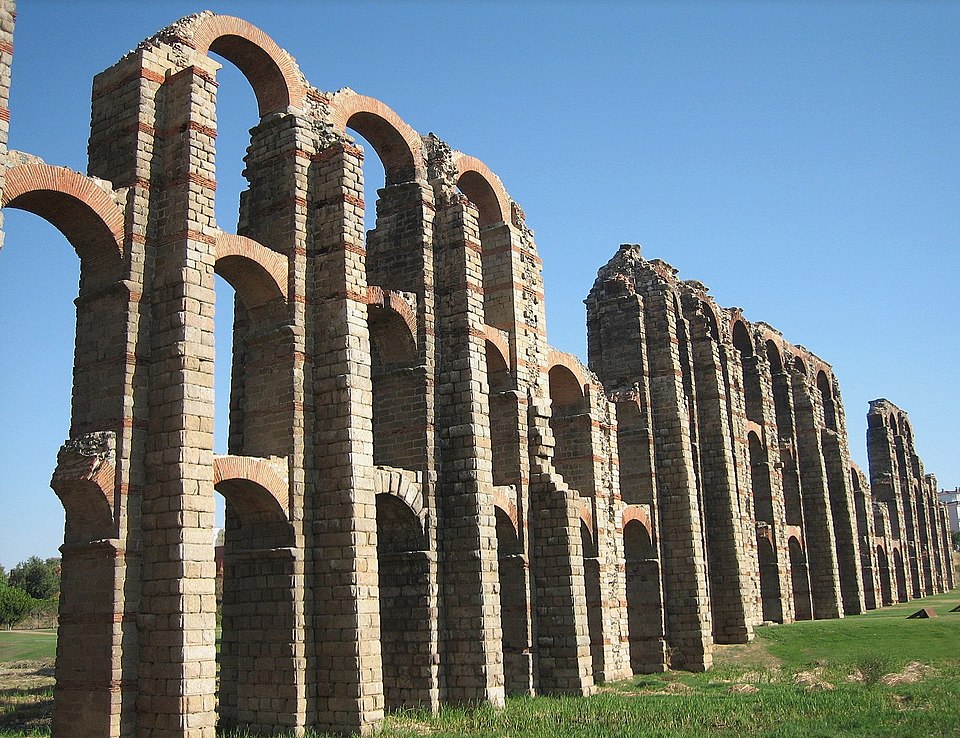
- Acueducto de los Milagros (Mérida, Spain): “Aqueduct of the Miracles,” known for its red and white alternating brickwork.
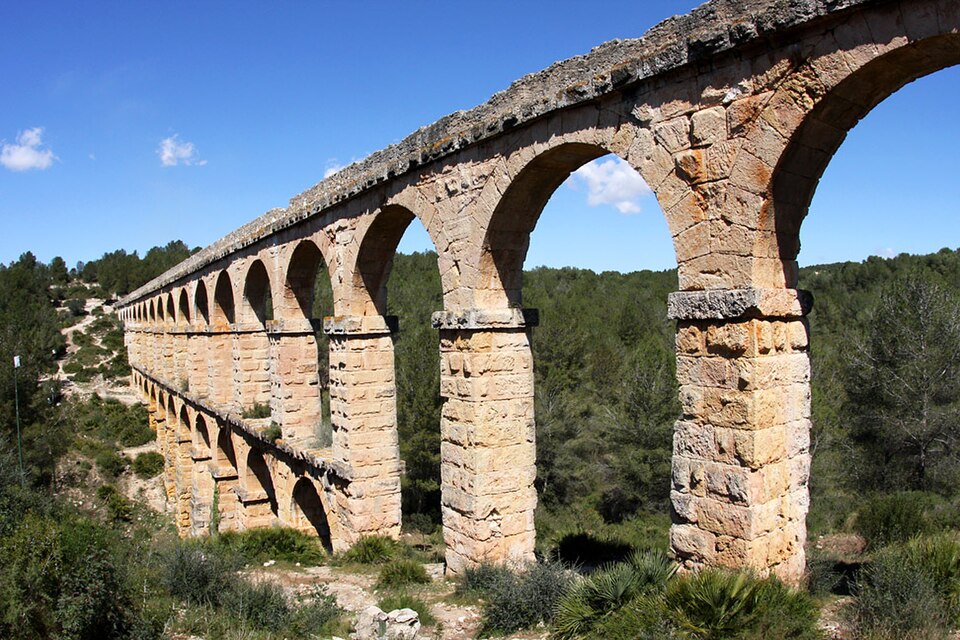
- Pont de les Ferreres (Tarragona, Spain): A lovely aqueduct often called “Pont del Diable”, Devil’s Bridge, with twin-tiered arches in a peaceful setting.
Why They Matter Now
Roman aqueducts are engineering marvels, not mere relics. They are symbols of civic imagination, of an ancient world that believed cities could be beautiful, functional, and generous with their water. These structures carried water, health, ritual, public life, and permanence. To stand beneath them today is to understand empire through its infrastructure, and to feel, with awe, how stone still remembers a river long gone dry.
Where to Stay in Rome, Italy
For visits focused on Roman aqueducts, the historic center puts major sites within walking distance. The Colosseum and Roman Forum neighborhoods offer hotels ranging from budget guesthouses to mid-range options, with direct access to archaeological zones. This location trades some quiet for convenience, placing you near public transit, restaurants, and the sites themselves.
The Trastevere district, across the Tiber River, offers a quieter residential feel while remaining close to the aqueduct remains. Hotels and guesthouses here tend to be smaller, family-run properties. The neighborhood has its own restaurants and local character, with a 20-minute walk to the Forum or Palatine Hill.
If you prefer modern amenities and don’t mind staying slightly further from center, the area around Termini Station offers reliable three-star and four-star chains at reasonable rates. This zone has good metro connections to all archaeological sites, making your commute to the aqueducts straightforward. The trade-off is a more generic urban feel.
Budget travelers should consider neighborhoods east of the Colosseum or around San Lorenzo, where hostels and simple hotels are cheaper and attract other budget-conscious visitors. Both areas sit on metro lines that reach major sites quickly. You sacrifice proximity to the center but gain access to local Roman neighborhoods where people actually live, not just where tourists go.
