
By Patricia Bernstein
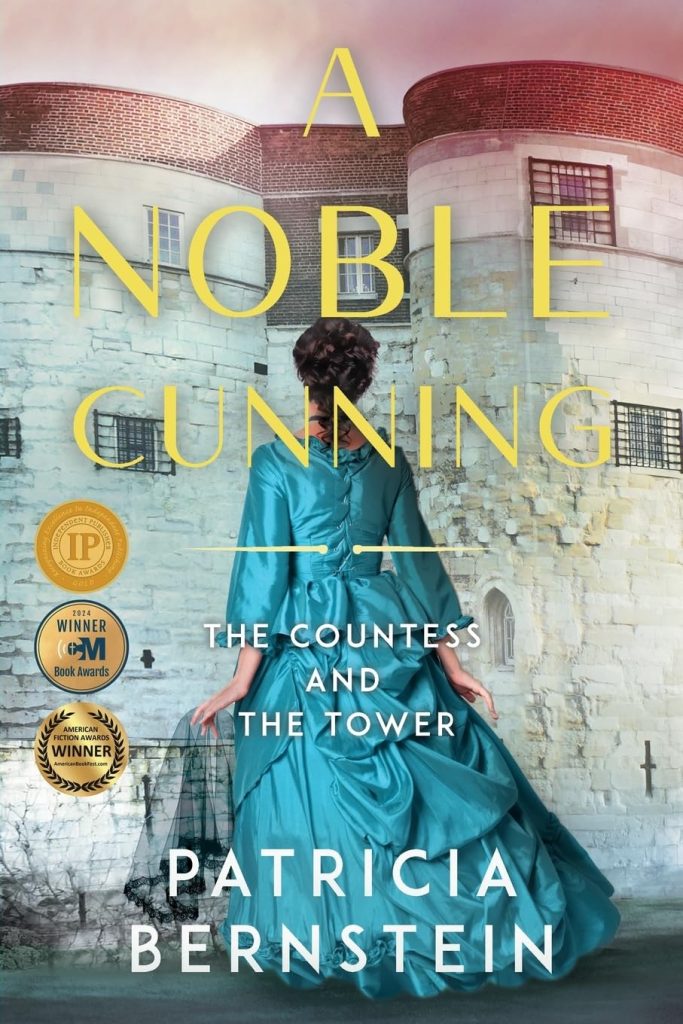
My debut novel A Noble Cunning: The Countess and the Tower began with a visit to beautiful, historic Traquair House, located near Innerleithen, Peeblesshire. My husband Alan and I were on a guided tour of the grand house, which bills itself as Scotland’s oldest continually occupied stately home. We paused during the tour to admire side-by-side portraits of a glamorous 18th-century couple, William Maxwell, Earl of Nithsdale, and his intrepid countess, Winifred Maxwell.
Our guide then recounted how Winifred rescued her husband from the Tower of London the night before his scheduled execution in 1716—a feat no one has ever replicated. I couldn’t get this story out of my head and started thinking about turning it into a novel. William and Winifred Maxwell inspired the characters Gavin and Bethan Glentaggart in my novel, A Noble Cunning

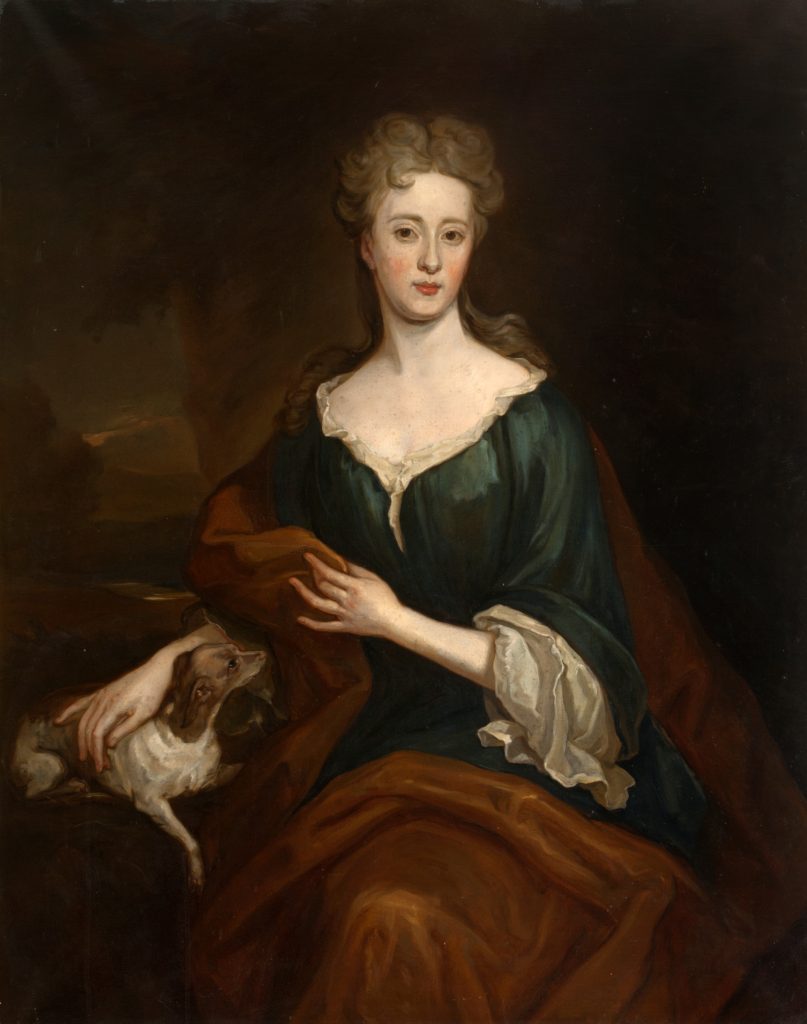
The Maxwells never lived at Traquair. They owned an estate in what is now Dumfries and Galloway, along Scotland’s southern border. But they visited Traquair often because William Maxwell’s sister Mary had married the Earl of Traquair and lived most of her life in the famous house. The chief fact I remember learning about Mary is that she bore 17 children, though many did not survive to adulthood. Somehow Mary also managed to live to the grand old age of 88, especially for that time.
Traquair House began as a hunting lodge over 900 years ago for Scotland’s kings and queens deep within Ettrick Forest, where hunters pursued wolves, wildcats, wild boar, bears, and deer. The manor passed from royal hands to the Stuart family home in 1479.
John Stuart, 4th Laird of Traquair, served as Captain of the Queen’s bodyguard to Mary Queen of Scots. The Stuarts supported the unfortunate Mary and later other royal Stuarts, including poor King James II, who was forced from his throne and exiled during the so-called Glorious Revolution, his son James Francis Edward known as “the Chevalier,” and finally James’ grandson popularly known as “Bonnie Prince Charlie.
The Chevalier and Bonnie Prince Charlie, called the “Old Pretender” and “Young Pretender” by their enemies, were related by descent. These unflattering nicknames implied that Stuart claims to the British throne after King James II’s overthrow and Queen Anne’s death in 1714 were illegitimate.
The Stuarts’ followers were called “Jacobites” because James in Latin is Jacobus. The Jacobites rose in rebellion against King George I in 1715 and King George II in 1745 in doomed attempts to restore the Stuarts to the throne. Winifred Maxwell’s husband William was arrested and imprisoned in the Tower of London for fighting against King George I in the 1715 Jacobite Rebellion, where he was condemned to death.
In my novel, Traquair House becomes Talla Mathan or “Bear Hall” for the stone bears guarding the front gates. After Bonnie Prince Charlie visited Traquair in 1745 during the Rebellion, the Earl swore he would lock the Bear Gates and never open them again until a Stuart king was crowned in London. The gates remain locked to this day. Visitors arrive at Traquair through a side entrance.
Today’s 21st laird, or officially “Lady” of Traquair, is Catherine Maxwell Stuart—the first woman to hold the title. A socialist, she ran for Parliament four times as a Labour Party candidate. Once she lost by just 90 votes. Today she manages Traquair as a visitor attraction offering three luxurious guest rooms.
Spending a night at Traquair is a rare privilege. The Pink, Blue, and White double bedrooms feature antique furniture, canopied beds, and private bathrooms. The Pink Room overlooks the house’s maze. The Blue and White Rooms adjoin the lovely Lower Drawing Room, where guests can relax by the open fire. The Blue Room overlooks Cupid’s Garden, while the White Room offers views all the way to the famous Bear Gates.


But if you can’t stay overnight, you can still tour 19 public rooms, including the High Drawing Room; the Still Room, featuring English and Chinese porcelain; the First Cellar, outfitted with butter churn and Victorian kitchenware; the Dressing Room with bath, bidet and hot water cans; and the King’s Room where Mary Queen of Scots stayed with her husband Darnley and the baby prince in a cradle at the foot of the bed.
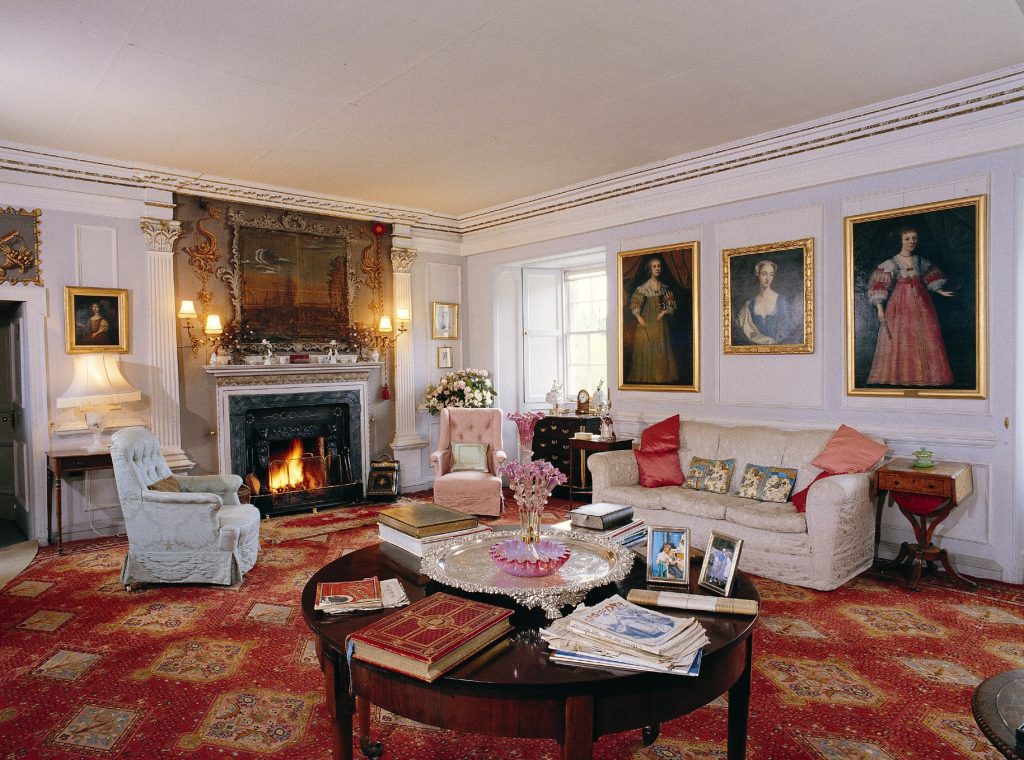
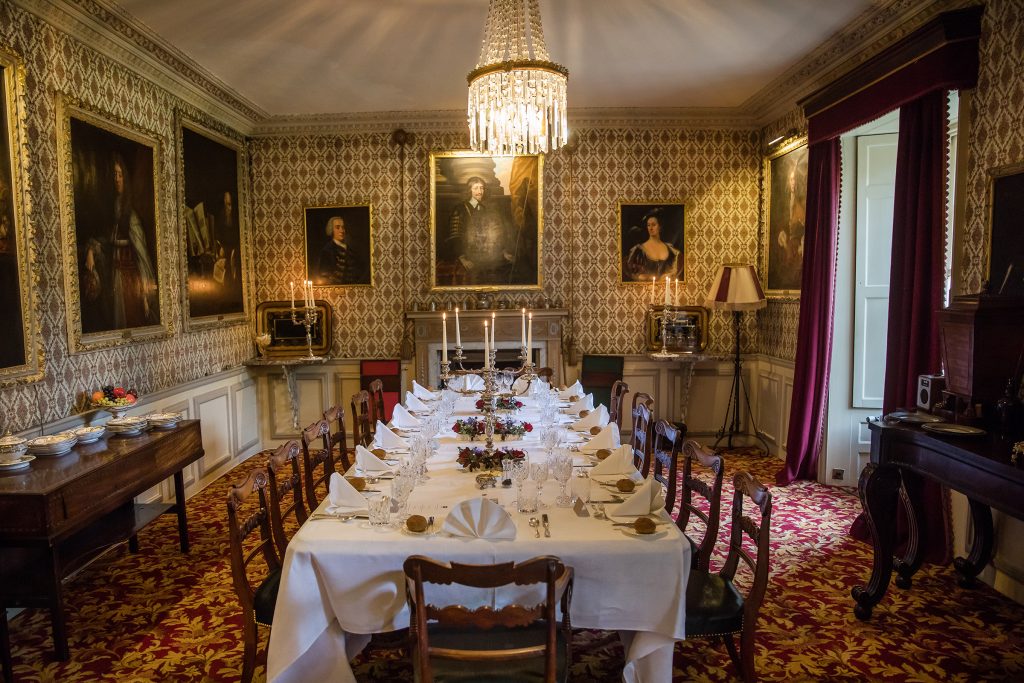
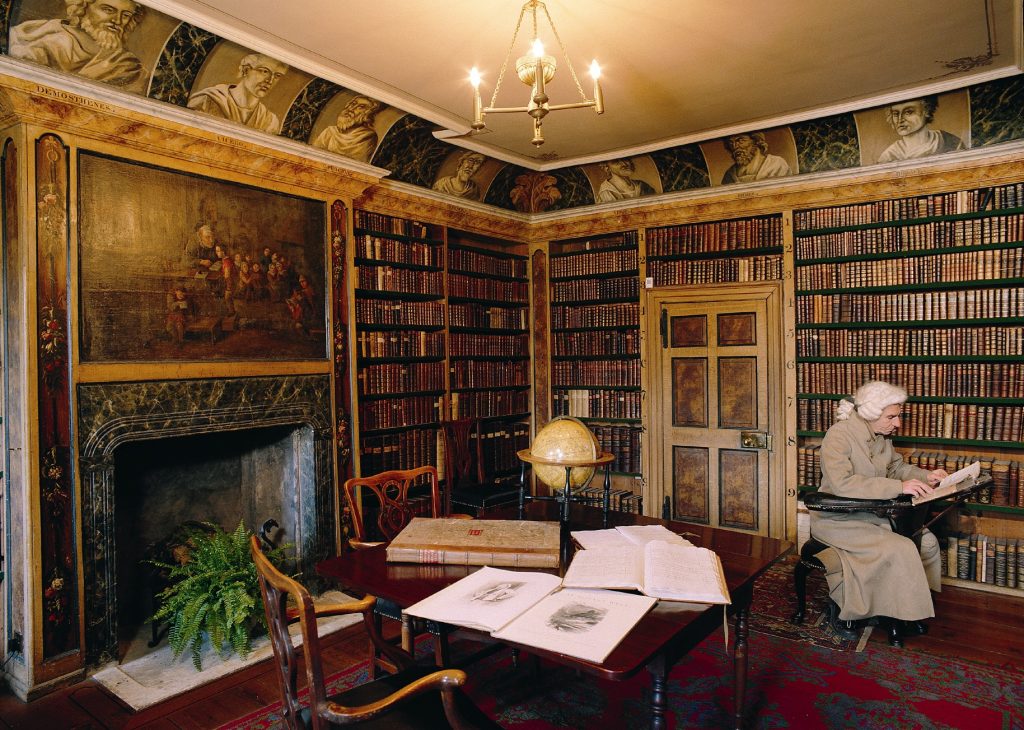
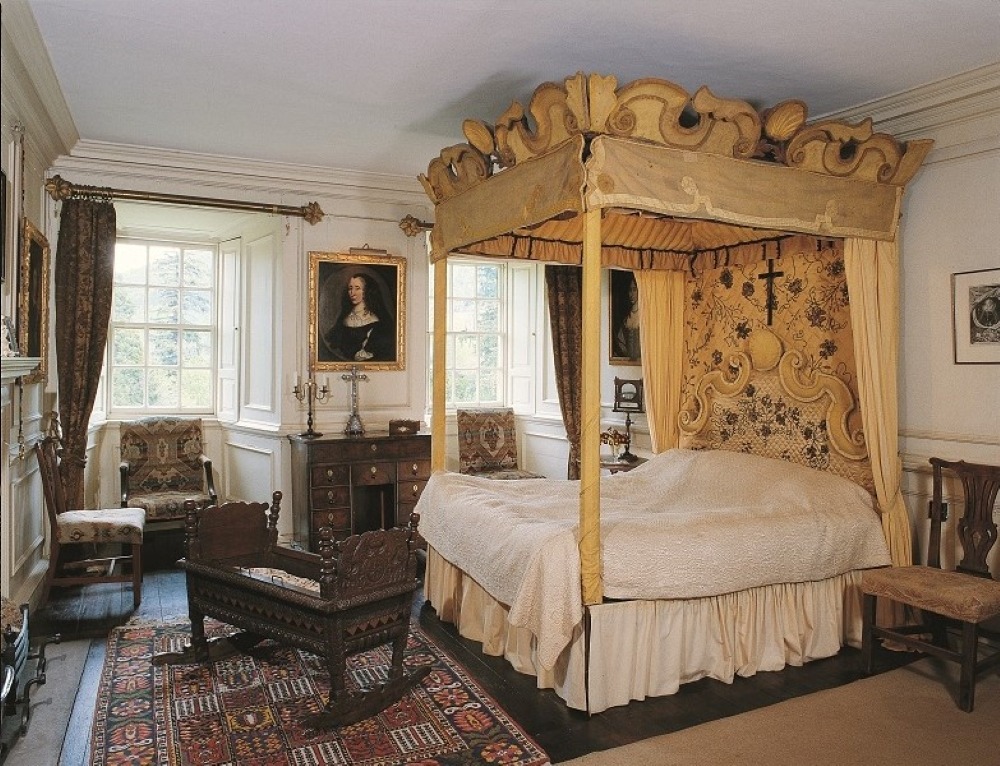
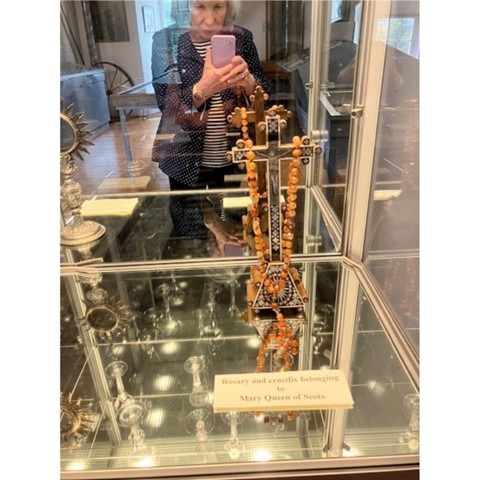
Upstairs are the Dolls Collection, the High Gallery, the First and Second Libraries housing about 3000 books, and the Priest’s Room, which once served as a chapel. The priest could escape down a secret staircase hidden behind a shelved cupboard during raids by authorities seeking illegal priests, as Roman Catholic priests were once banned in England along with rosaries and mass. The Museum Room holds treasures from the house’s long history: a hunting scene mural, a rosary and crucifix belonging to Mary Queen of Scots, fine embroideries, and the cloak William Maxwell wore when he escaped the Tower of London.

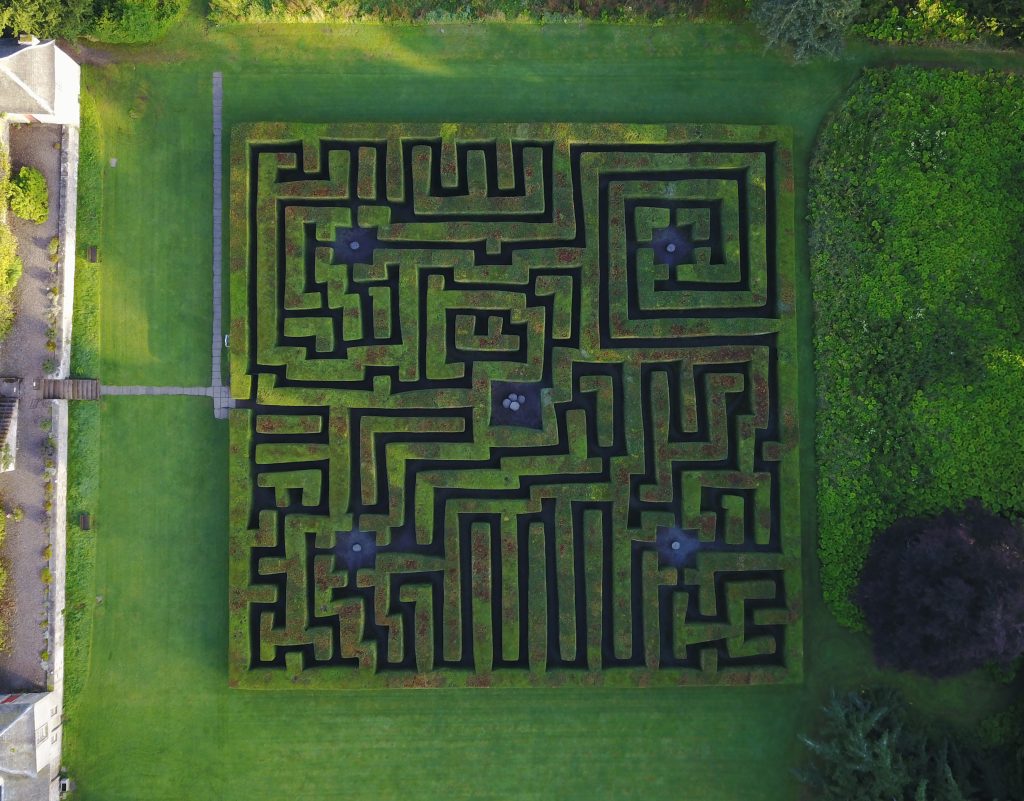
Traquair also features wedding venues, a restaurant in the Old Walled Garden Café, Scotland’s largest hedged maze, and numerous public events and festivals. Special events at Traquair open to the public include a Woodland Light Trail, Apple Day for picking and juicing estate orchard apples, Halloween Spooky Fun, and a Christmas Open House. Traquair even houses a micro-brewery that exports dark ales worldwide. You can buy Traquair Ale Shampoo in the gift shop along with books, tapestries, embroidery and needlework kits, fudge, shortbread, mugs, tankards, tweed caps, ties, and many other goodies. I can personally attest to the benefits of Traquair Ale Shampoo.
Traquair House today offers visitors a delightful passage into the long ago, instantly recognizable the moment one enters the front door and begins climbing the stone spiral staircase. But this is no tragic, decaying, haunted house, nor a museum locked up and abandoned at night when the docents go home. A family still lives here, and any ghosts of former residents seem thoroughly domesticated and well-intentioned. Visitors to Traquair are welcomed and encouraged to explore and return again and again.
Visit: https://www.traquair.co.uk
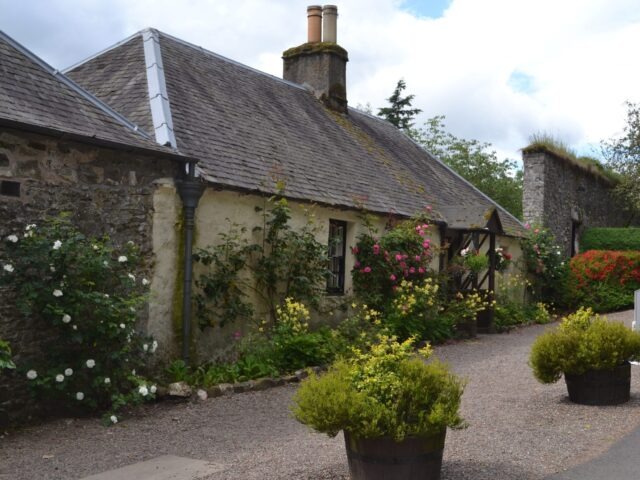
Photos courtesy of Traquair House and Patricia Bernstein
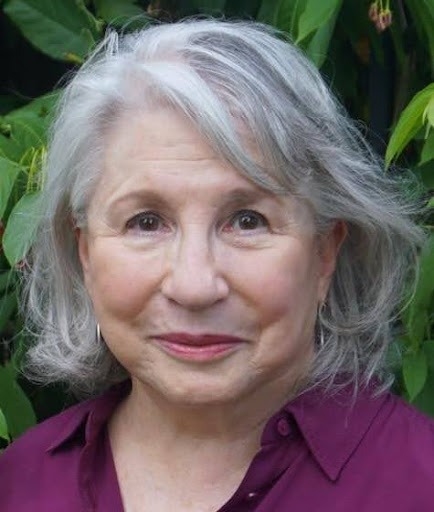
Patricia Bernstein earned a Degree of Distinction in American Studies from Smith College. She has published five books, including her debut novel A Noble Cunning, named best Catholic Novel of 2023 by the Catholic Media Association, and Ten Dollars to Hate, about the 1920s Ku Klux Klan, which was one of three finalists for the Ramirez Family Award from the Texas Institute of Letters and named one of the 53 best books ever written about Texas. A Noble Cunning: The Countess and the Tower is based on the true story of a persecuted Catholic noblewoman who rescued her husband from the Tower of London the night before his scheduled execution with the help of her women friends. www.patriciabernstein.com
Where to Stay in Innerleithen, United Kingdom
Innerleithen has a handful of small hotels and guesthouses within walking distance of Traquair House, making the village a convenient base. The Traquair Arms Hotel sits on the high street, offering traditional Scottish hospitality, straightforward rooms, and a reliable restaurant downstairs. For a quieter stay, several bed and breakfasts occupy converted stone cottages throughout the village, each offering personal service and local knowledge of the area’s history and walking routes.
If you prefer more space or prefer self-catering, holiday cottages and farm stays dot the Tweed Valley around Innerleithen. Many are within a 10 to 15 minute drive of Traquair House, giving you flexibility to explore neighboring villages like Walkerburn and Peebles without returning to town each evening. These properties range from renovated farmhouses to modern conversions in rural settings, with gardens or grounds where you can unwind after a day of sightseeing.
For visitors seeking more amenities, Peebles lies about 6 miles south with a larger selection of chain and independent hotels, shops, and restaurants. The drive is roughly 15 minutes, making it a workable base if Innerleithen’s accommodations are full. However, staying in Innerleithen keeps you close to Traquair House and lets you experience the quiet village where the house has stood for centuries.
Most lodging in this area books up quickly during summer months and Scottish school holidays, so plan ahead. Email or call ahead to confirm availability, and ask proprietors about the best routes to Traquair House, the Innerleithen Craft Gallery, and riverside walks along the Tweed.
Recommended Reading
FICTION:
- A Noble Cunning: The Countess and the Tower by Patricia Bernstein. Based on the true story of a persecuted Catholic noblewoman who rescued her husband from the Tower of London the night before his scheduled execution. He was condemned for fighting against King George I in the 1715 Jacobite Rebellion.
- The Bookseller of Inverness by S. G. MacLean. Set in the aftermath of the battle of Culloden in 1745 which ended the last Jacobite Rebellion, this book has been called a “tartan noir.”
- Kidnapped by Robert Louis Stevenson. The orphan David Balfour, who has been betrayed and sold into slavery in the Carolinas by his uncle, joins forces with a Jacobite rebel to cross the Highlands and regain his rightful fortune.
- Waverley by Sir Walter Scott. The book follows the fortunes of young Edward Waverley, a British soldier who finds himself drawn to the Jacobite cause when he visits Scotland.
- The Flight of the Heron by D. K. Broster. The unlikely friendship between a Highlander and an English officer around the time of the 1745 Jacobite Rebellion.
- Just for fun…The Jacobite Chronicles, a series of books by Julia Brannan, featuring an unusual hero who is both a clan laird and a spy, a strong heroine, and an unforgettably nasty villain.
NONFICTION:
- Lady Nithsdale and the Jacobites by Flora Maxwell Stuart. A detailed account of the life of Winifred Herbert Maxwell, Countess of Nithsdale, whose courageous life is the basis for my novel.
- Flora MacDonald: “Pretty Young Rebel”: Her Life and Story by Flora Fraser. A thorough examination of the much-romanticized tale of Flora MacDonald, famous for helping Bonnie Prince Charlie escape Scotland following the collapse of the 1745 Jacobite Rebellion.
- The Prince and the Pretender: A Study in the Writing of History by A. J. Youngson. The story of the 1745 Jacobite Rebellion told twice, once by a supporter of the Hanoverian King Georges and again by a Jacobite supporter of the Stuarts.
- Ungrateful Daughters: The Stuart Princesses Who Stole Their Father’s Crown by Maureen Waller. Illuminating the background of the Jacobite story, this book describes how the two Protestant daughters of Catholic King James II, Mary and Anne, joined in the plot to depose him which ultimately ended Stuart rule in Great Britain.
- Making Toleration: The Repealers and the Glorious Revolution by Scott Sowerby. A surprising account of the efforts of King James II to establish complete religious tolerance in Great Britain as early as 1688.
- The Catholics: The Church and Its People in Britain and Ireland, from the Reformation to the Present by Roy Hattersley. A sweeping account of the Catholics who remained steadfastly faithful to the Roman Catholic Church despite Henry VIII’s break with Rome and the oppression of Catholics that followed.
- George I by Ragnhild Hatton. Who was this Elector of Hanover who was plucked from the heart of Germany to become King of Great Britain simply because he was the closest Protestant relative of Queen Anne?
