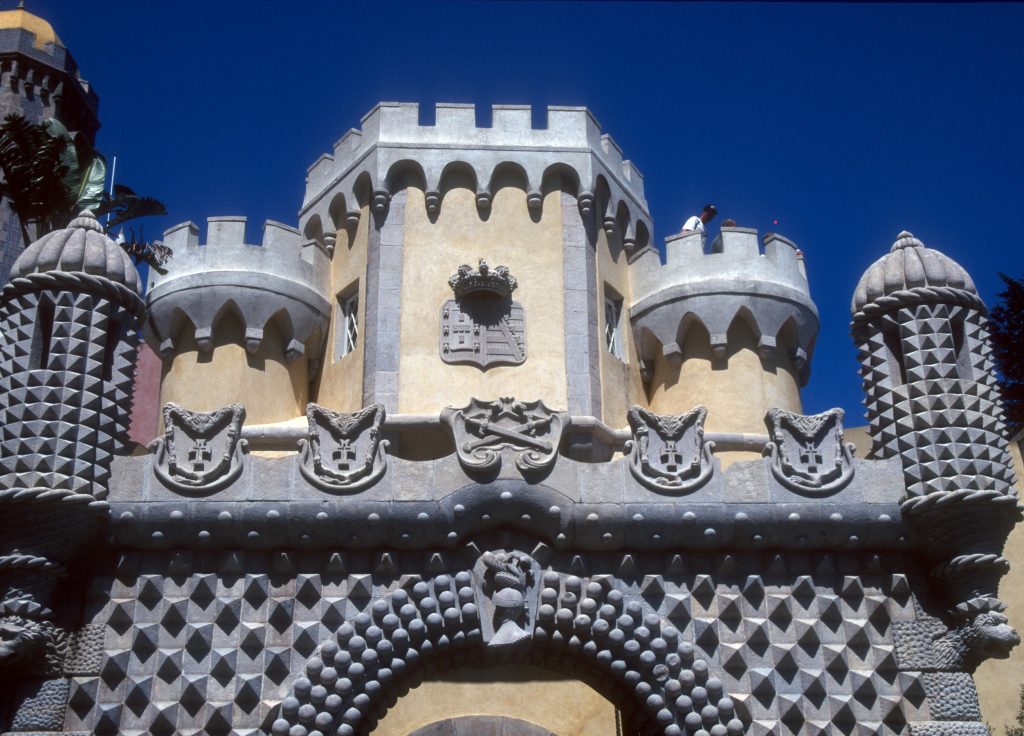
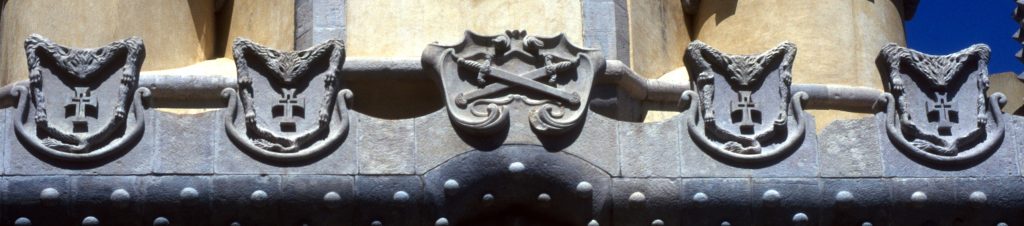
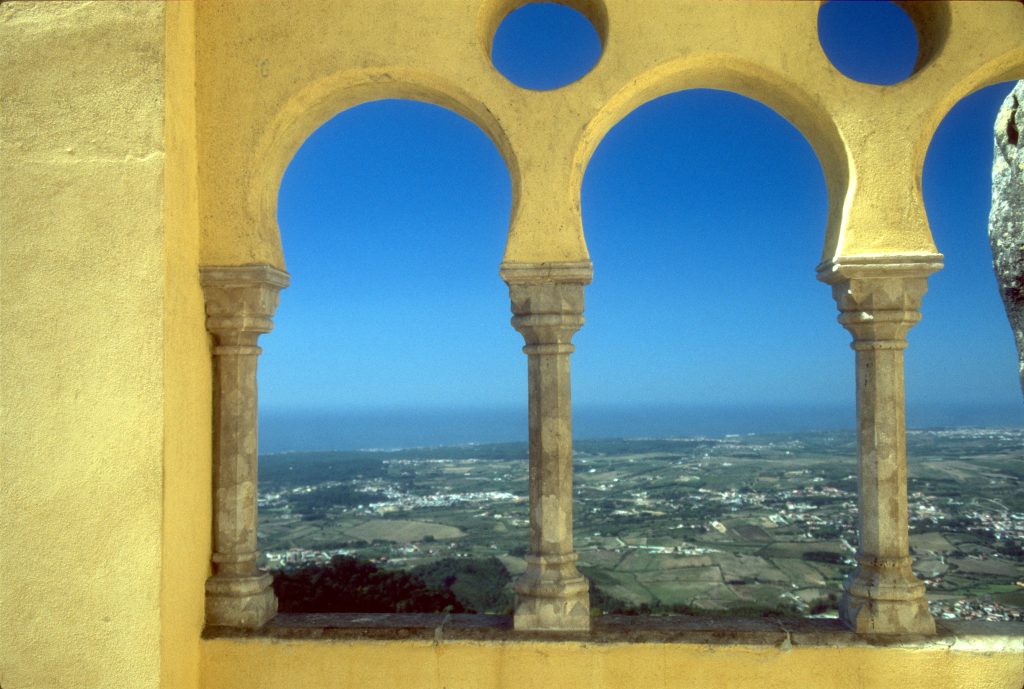
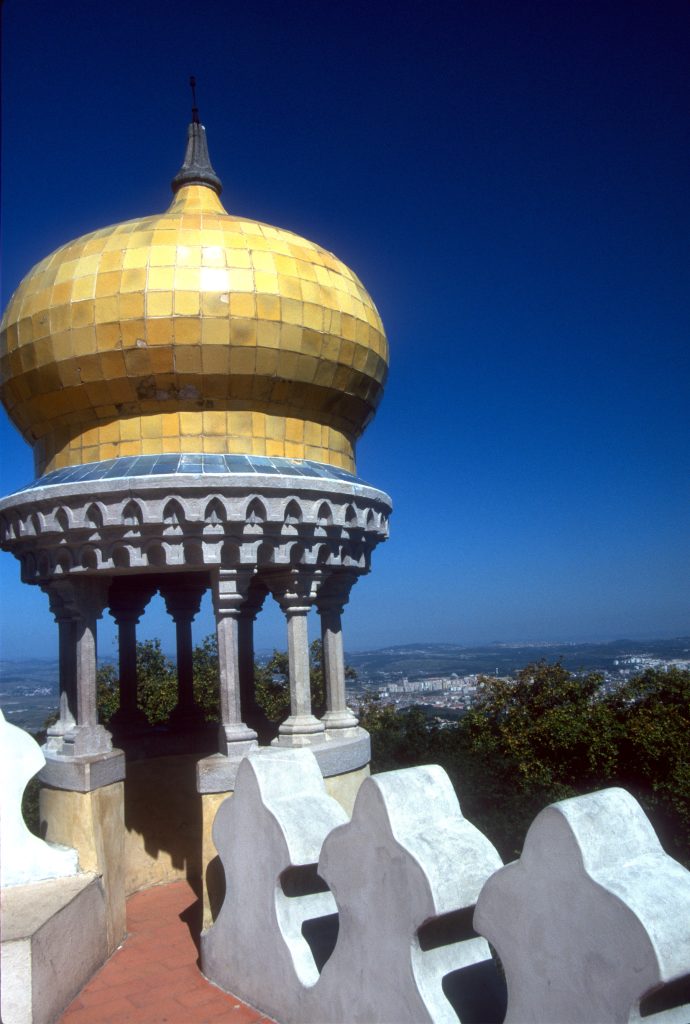
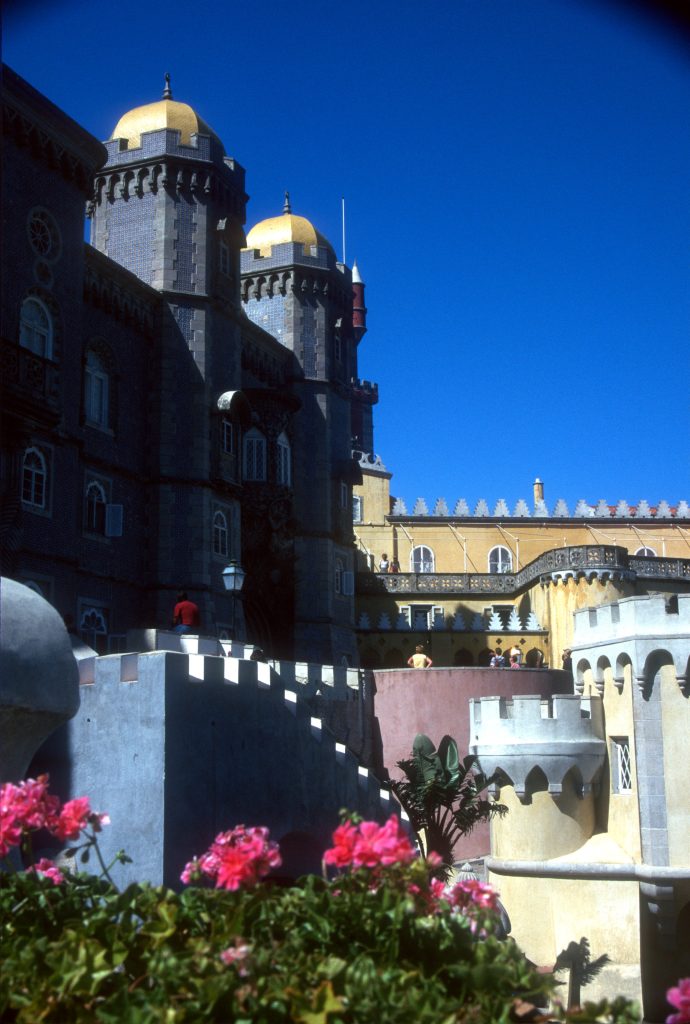
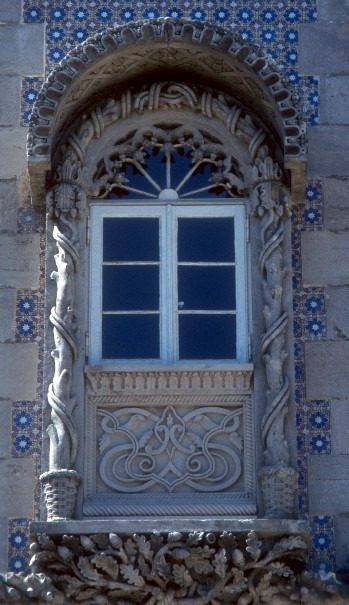
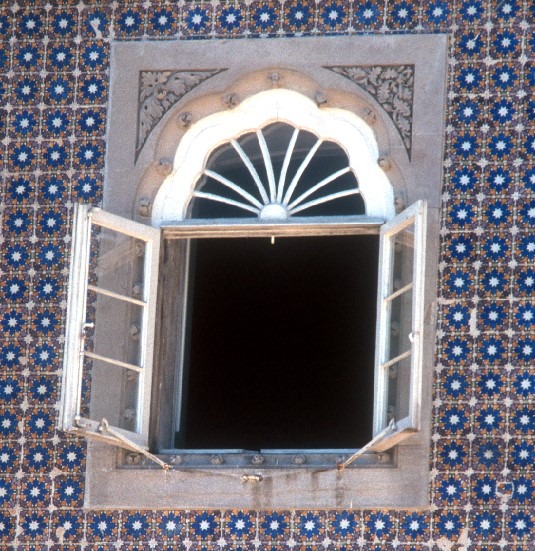
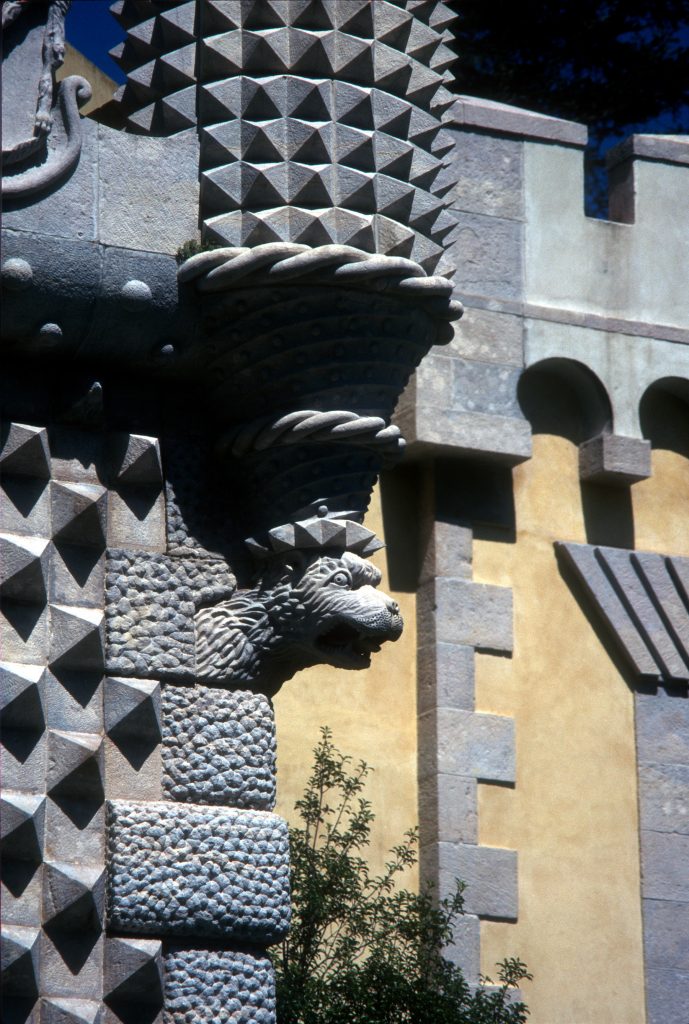
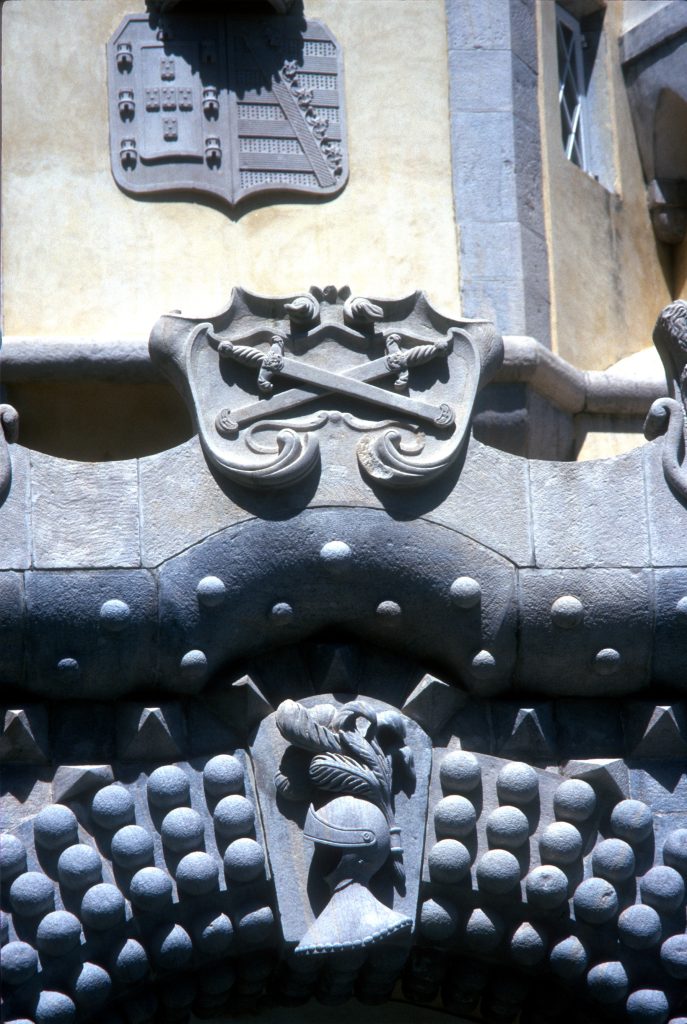
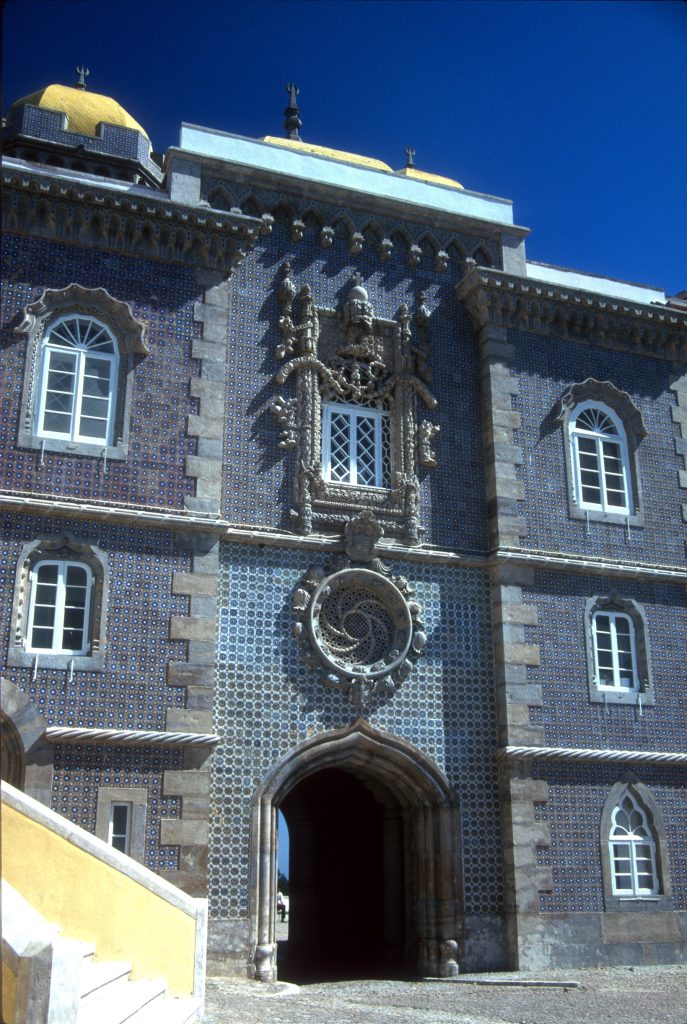
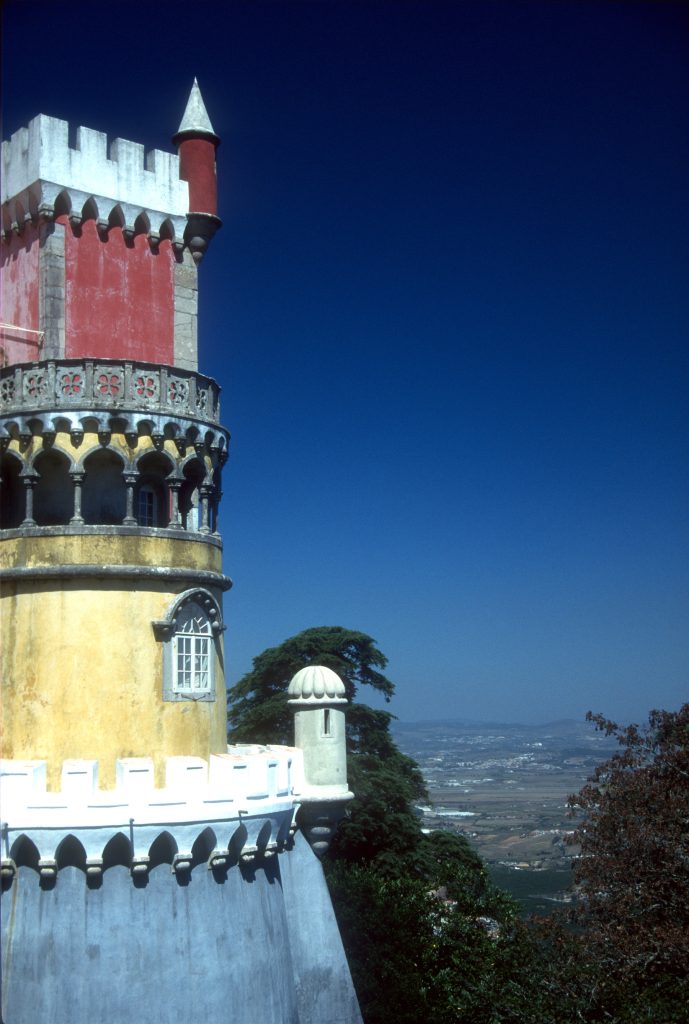
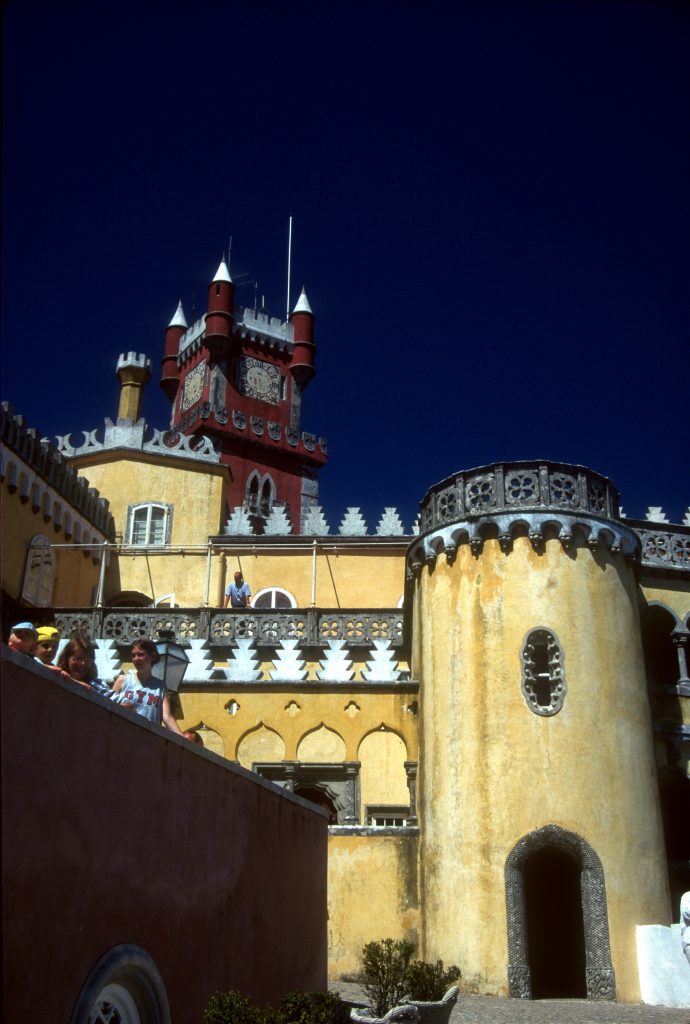
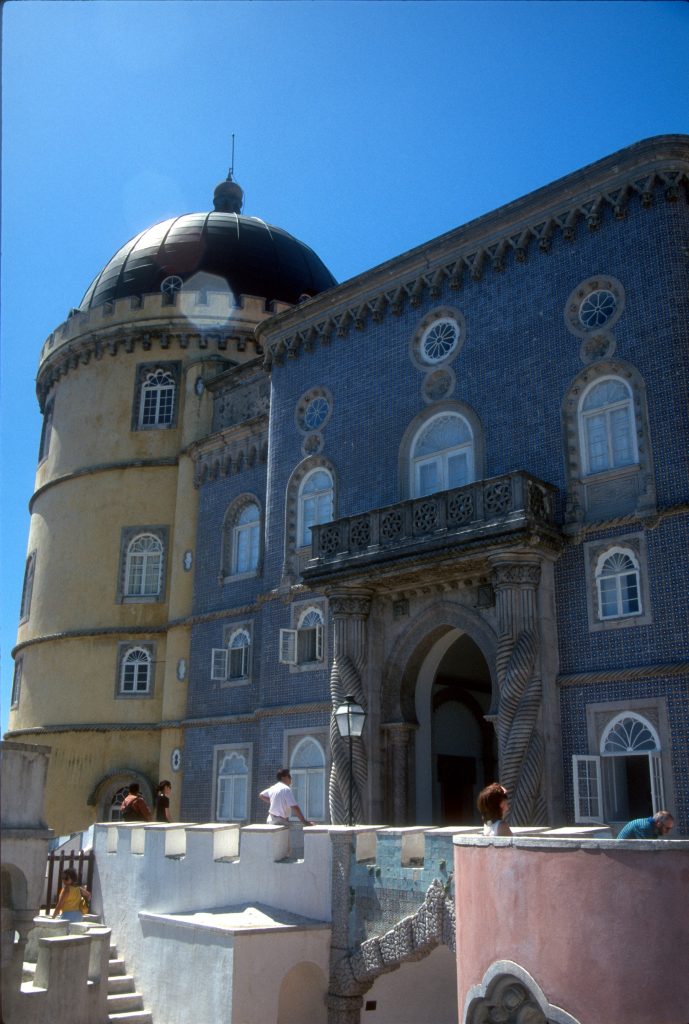
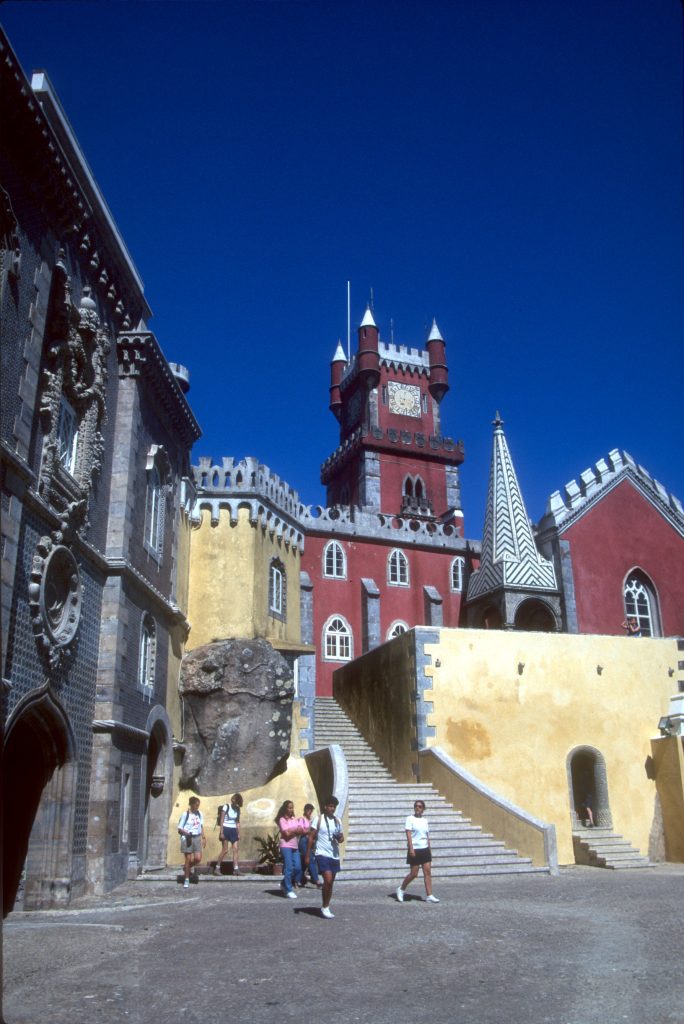
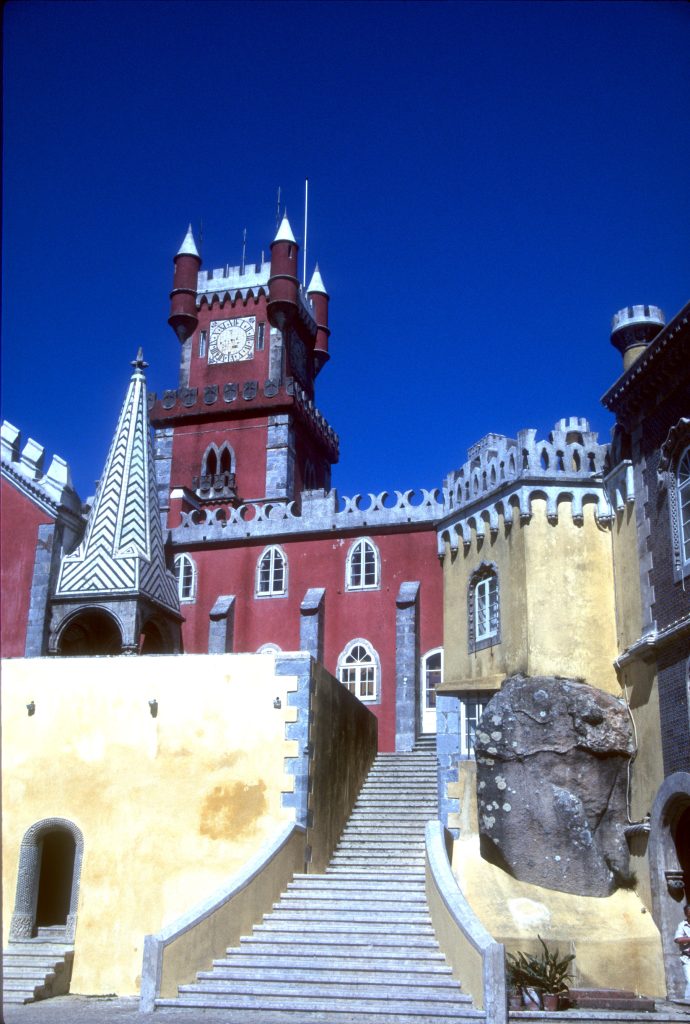
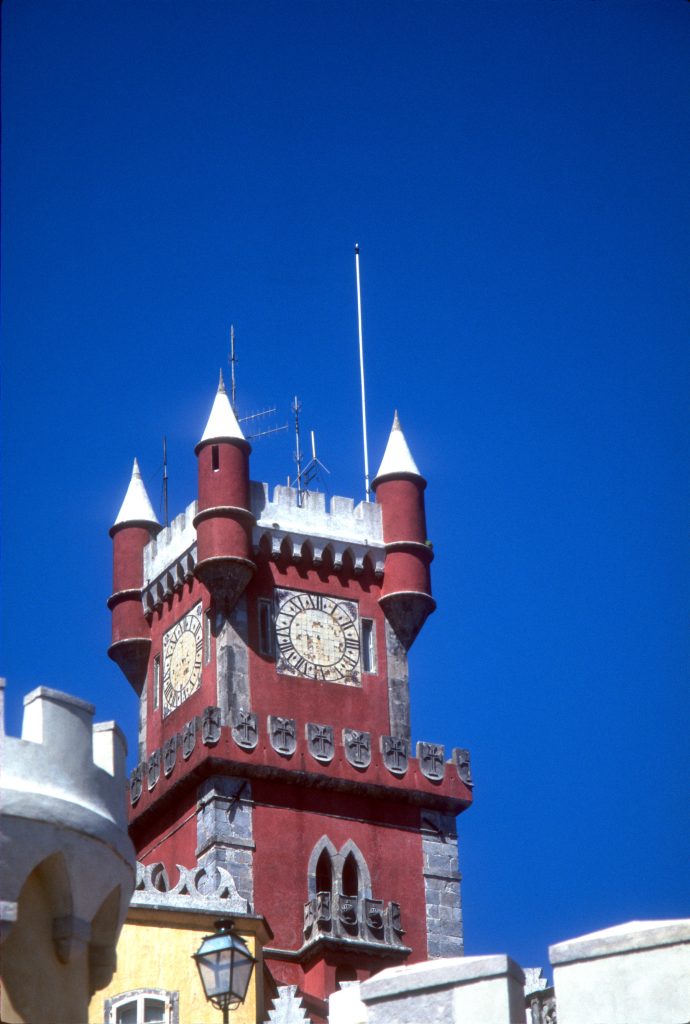
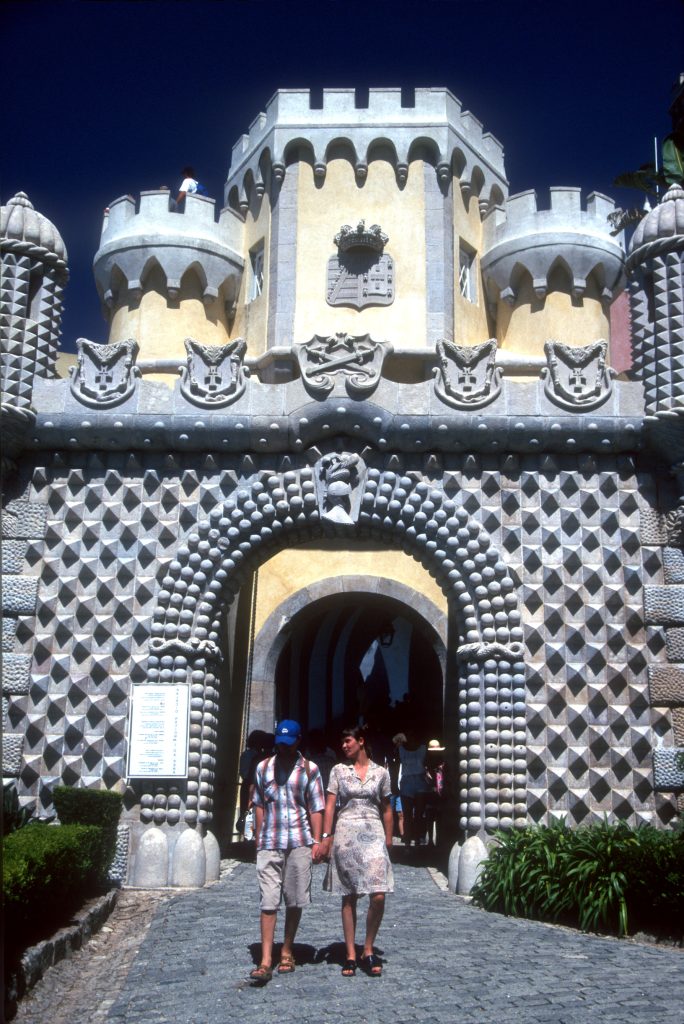
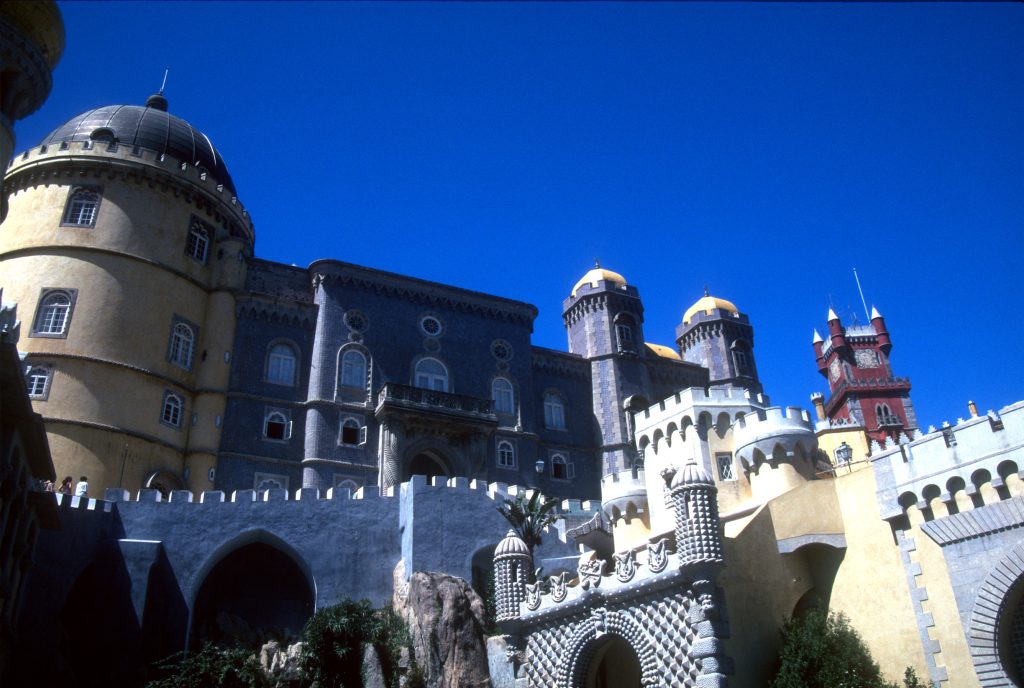
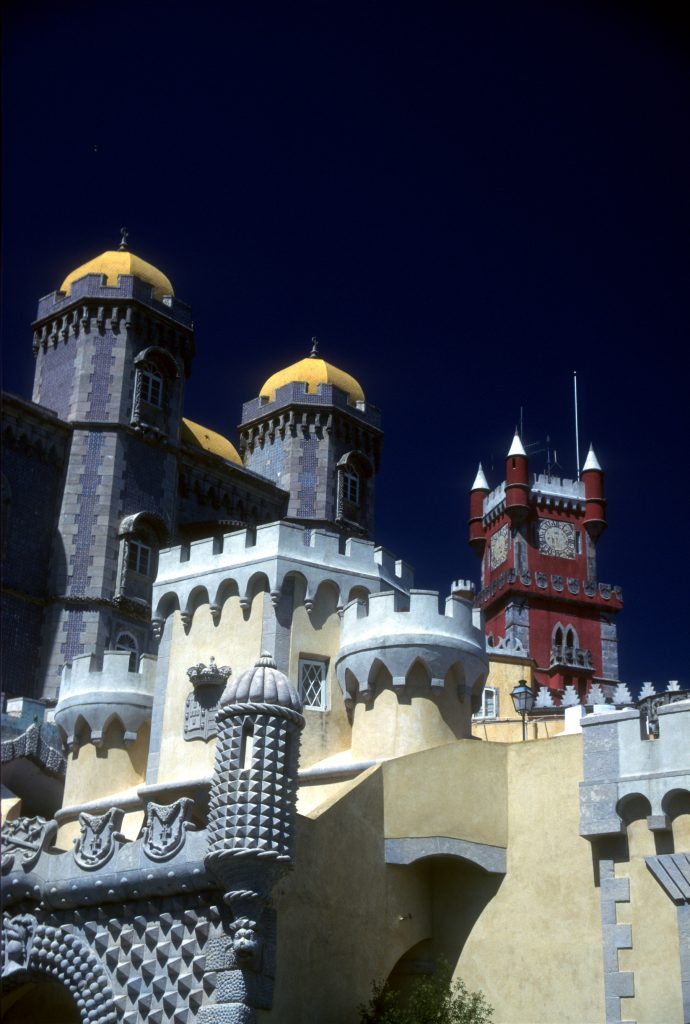
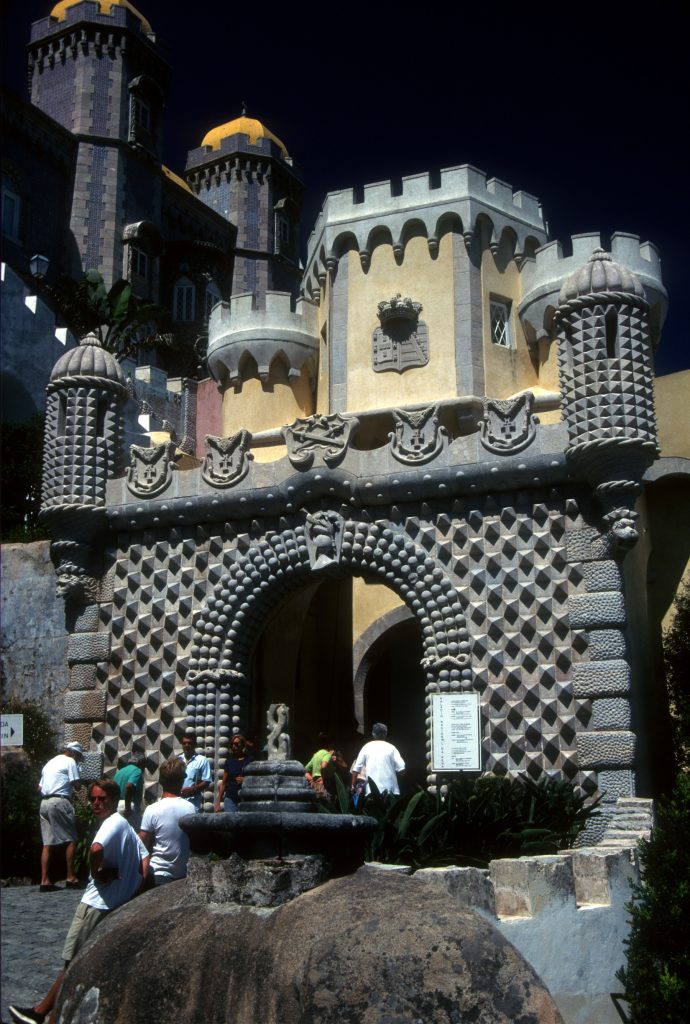
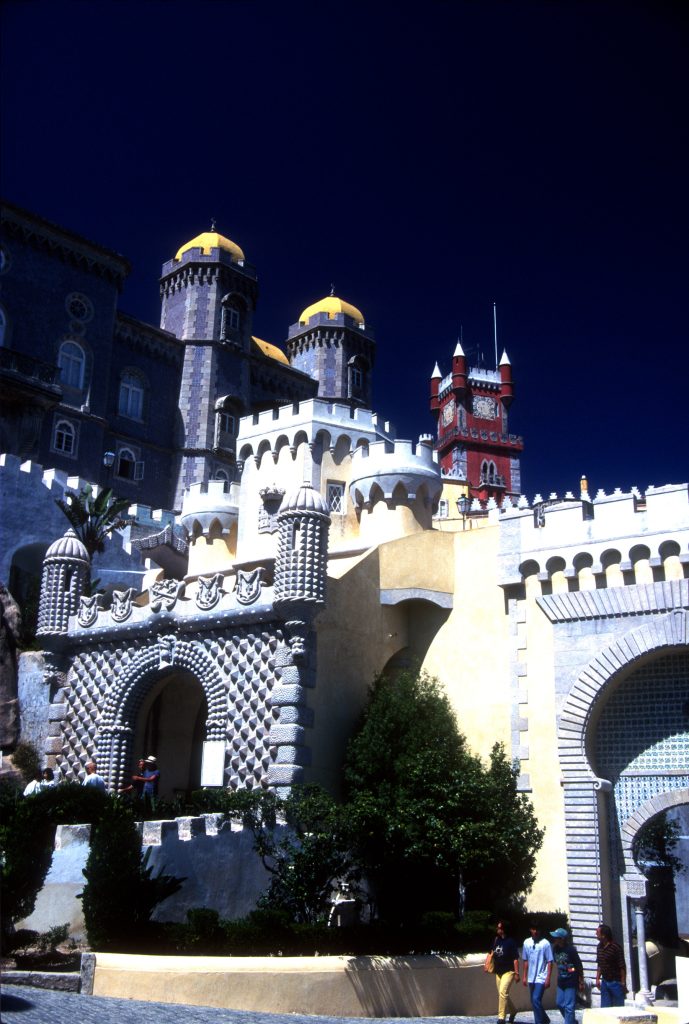
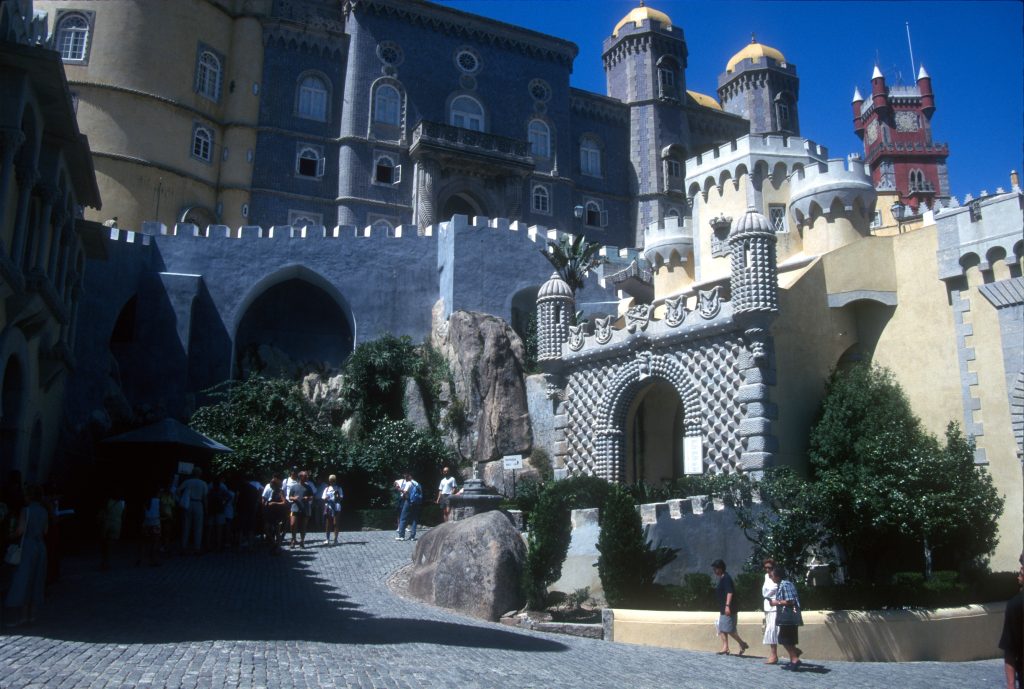
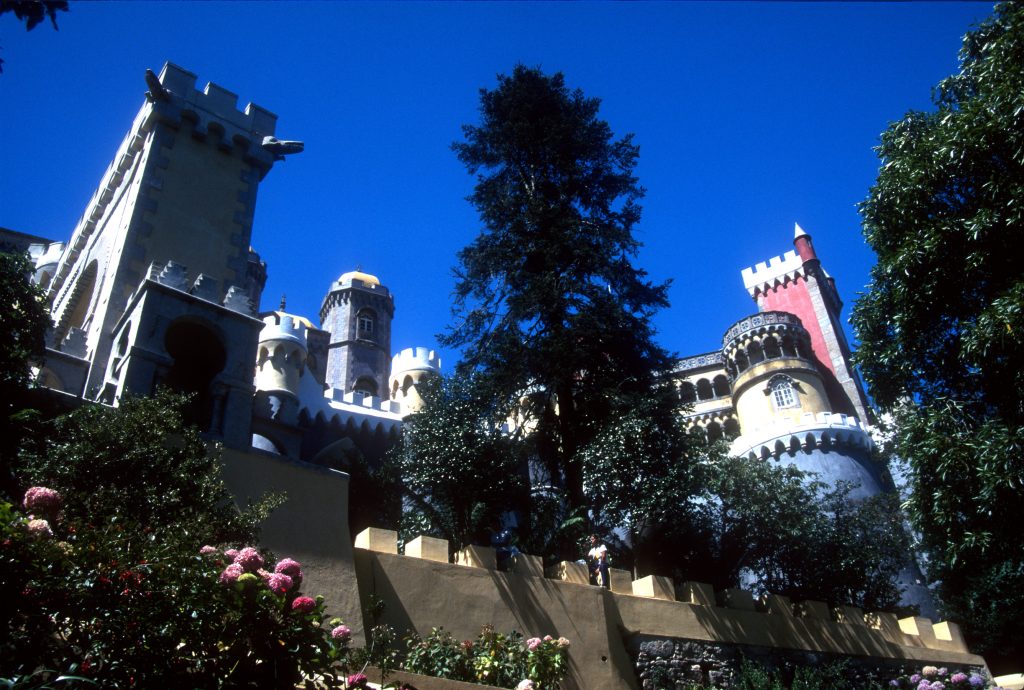
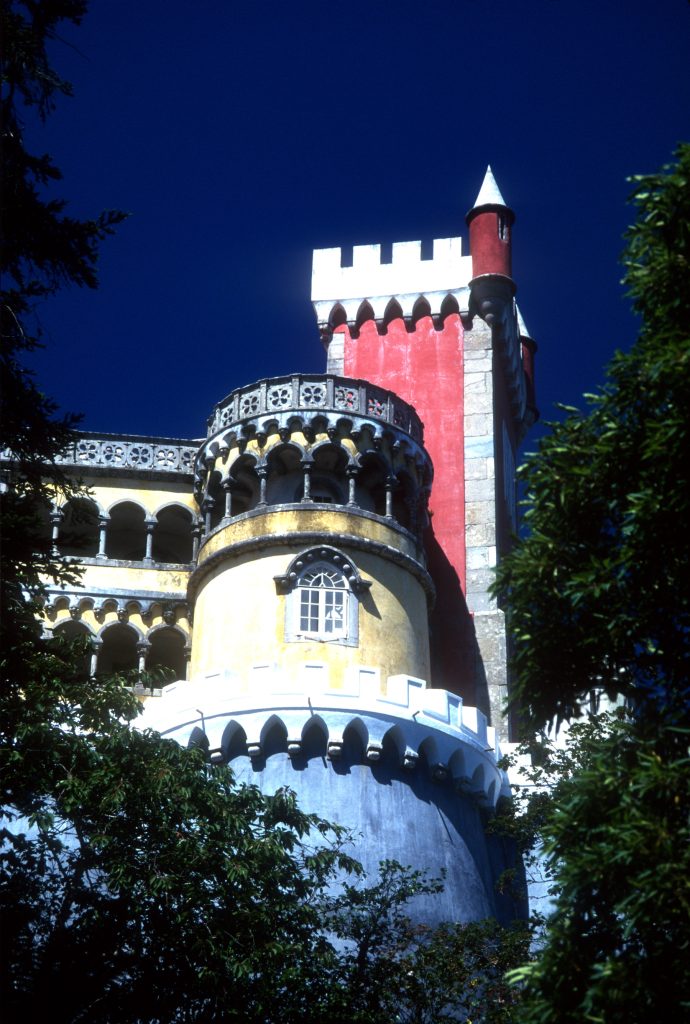
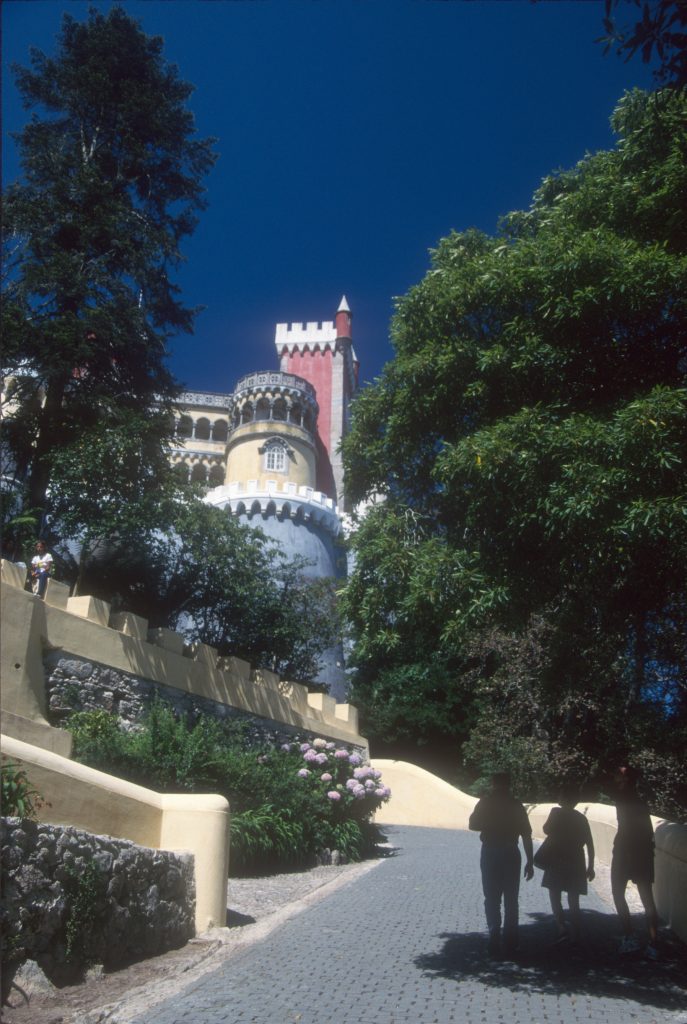
High above Sintra, where mist slips through the pines like silk, a riot of ramparts erupts from the mountaintop, sunburst yellow, rose-red, cobalt tile, and storybook crenellations. Palácio da Pena doesn’t so much sit on the ridge as perform upon it, a Romantic fantasia where Moorish curves, Manueline lacework, and Gothic flourishes waltz together. Seen through drifting cloud, it feels like a castle that dreamed itself into being.
National Monument in the Making
Long before the color and curlicue, there was devotion. A small chapel to Our Lady of Pena stood on this peak by the 12th century. In the early 1500s, King Manuel I raised a Hieronymite monastery here, humble, contemplative, close to heaven, until the 1755 Lisbon earthquake shattered most of the complex, leaving the chapel and cloister largely intact.
Enter the 19th century and King Ferdinand II, a cultured prince with a collector’s eye and a Romantic’s heart. In 1838 he acquired the ruined site and, with the German engineer-architect Baron Wilhelm Ludwig von Eschwege, began weaving the monastery’s survivors into a dazzling new palace. The result, completed between 1842 and 1854, was an intentional collage, Neo-Gothic, Neo-Manueline, Islamic revival, Renaissance echoes, Portugal’s answer to Europe’s Romantic castles.
History kept brushing past these walls. On October 5, 1910, as the monarchy fell, Queen Amélia was at Pena; she left the palace that morning to join her son, Manuel II, before the royal family embarked for exile. Later that year Pena became a National Monument and opened as a museum. In 1995, UNESCO inscribed the Cultural Landscape of Sintra, with Pena as its brightest exclamation point.
Splendor in the Pines
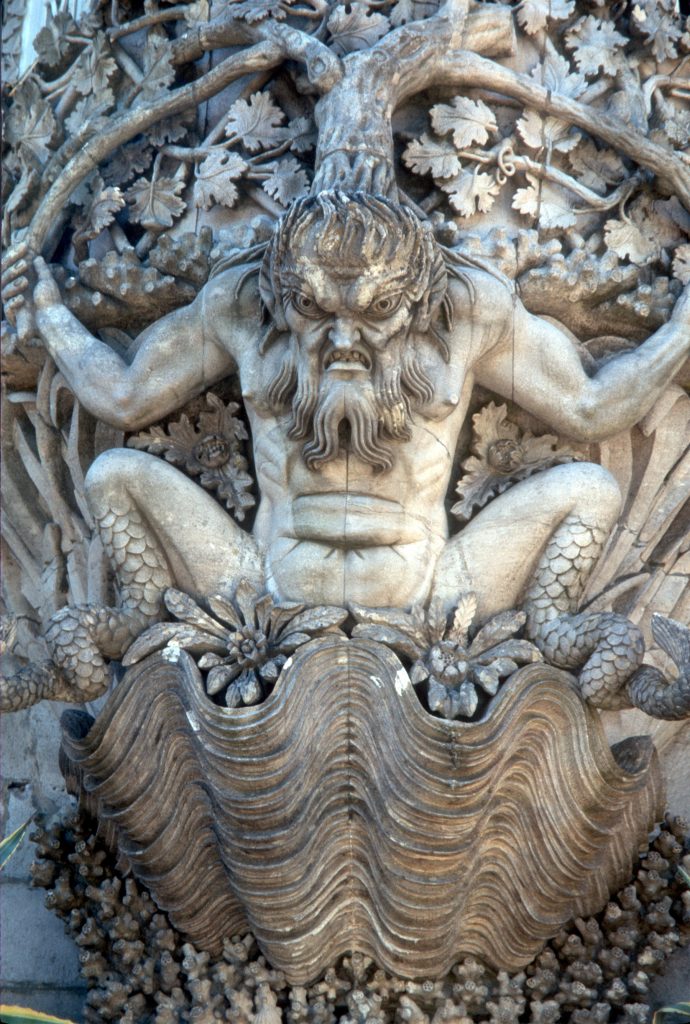
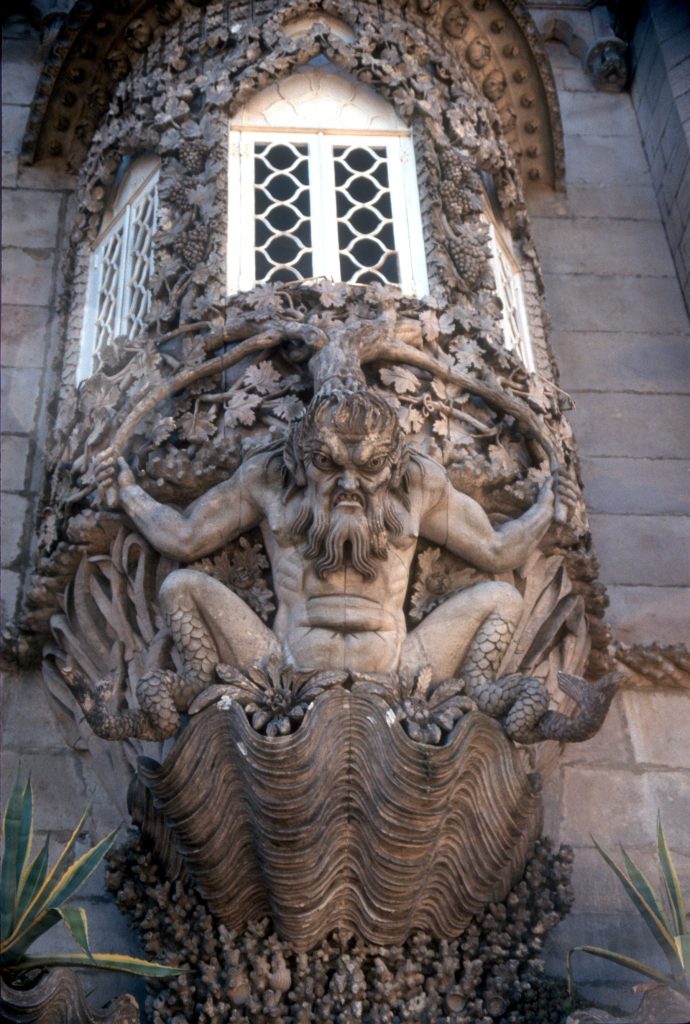
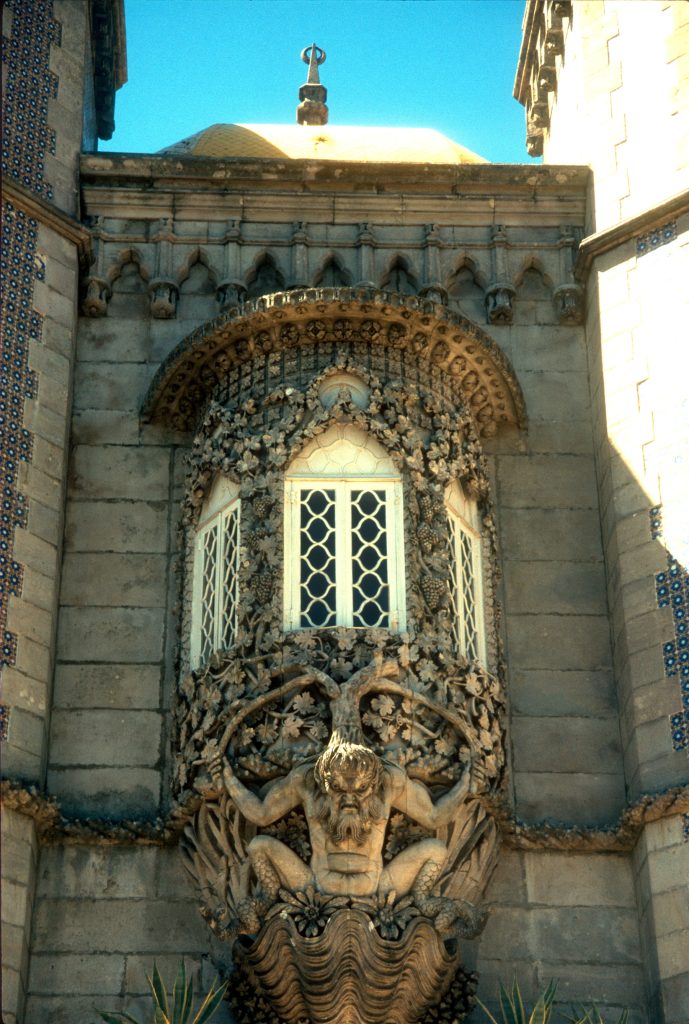
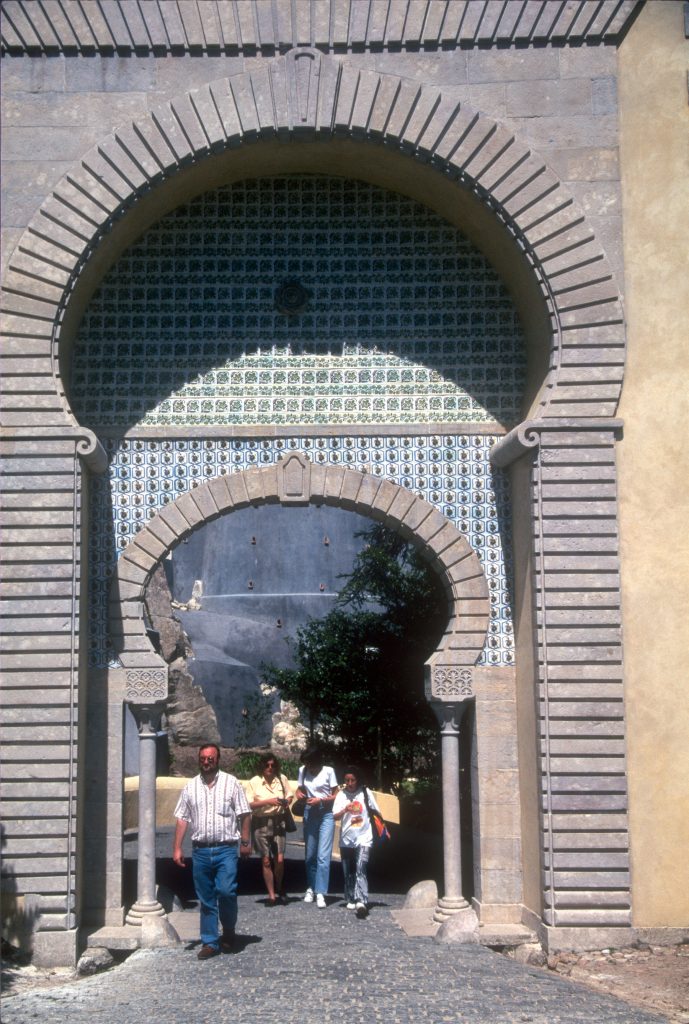
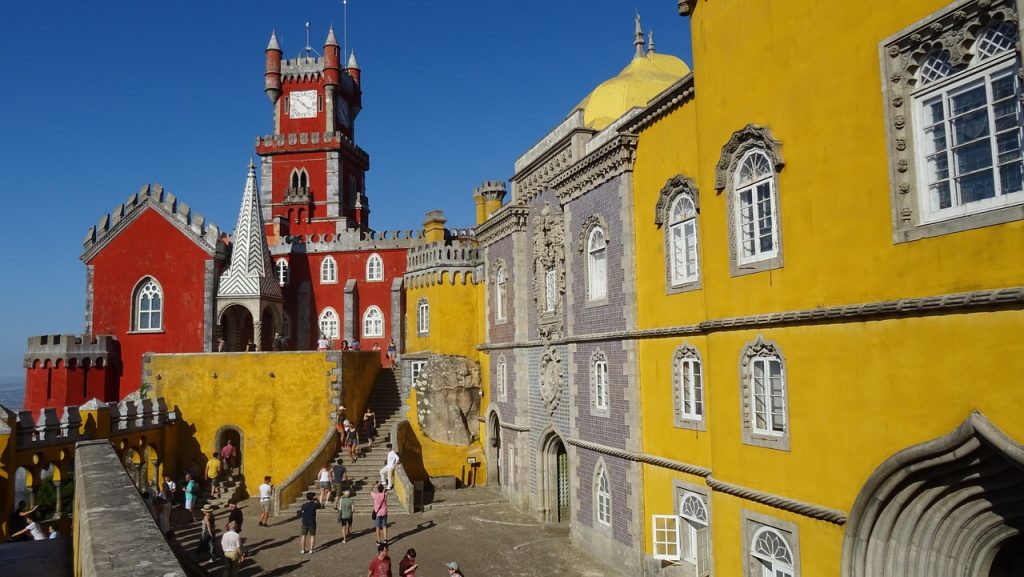
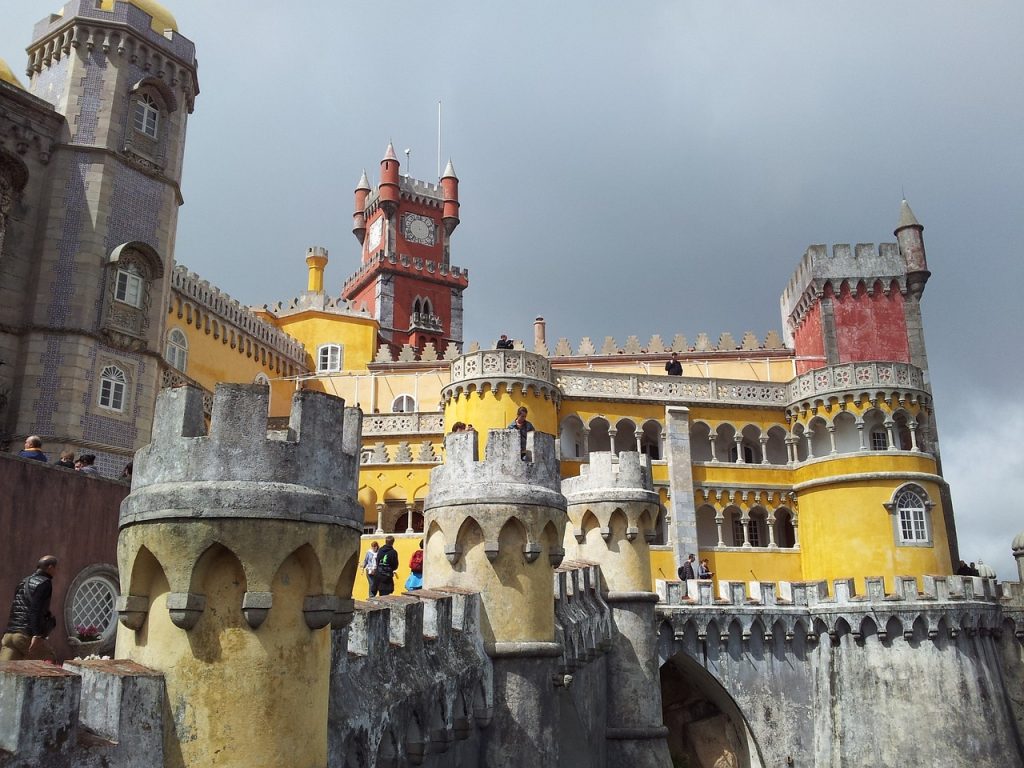
Approach the Arches Yard and everything tilts toward theater: battlements, tile-lined galleries, terraces that toss your gaze across a sea of green to the Atlantic. The most unforgettable entrance is the Triton Gate, a fantastical arch where a half-man, half-fish wrestles vines and seashells, the Romantic allegory of the world rising from the waters, dividing the “aquatic” lower realm from the terrestrial above.
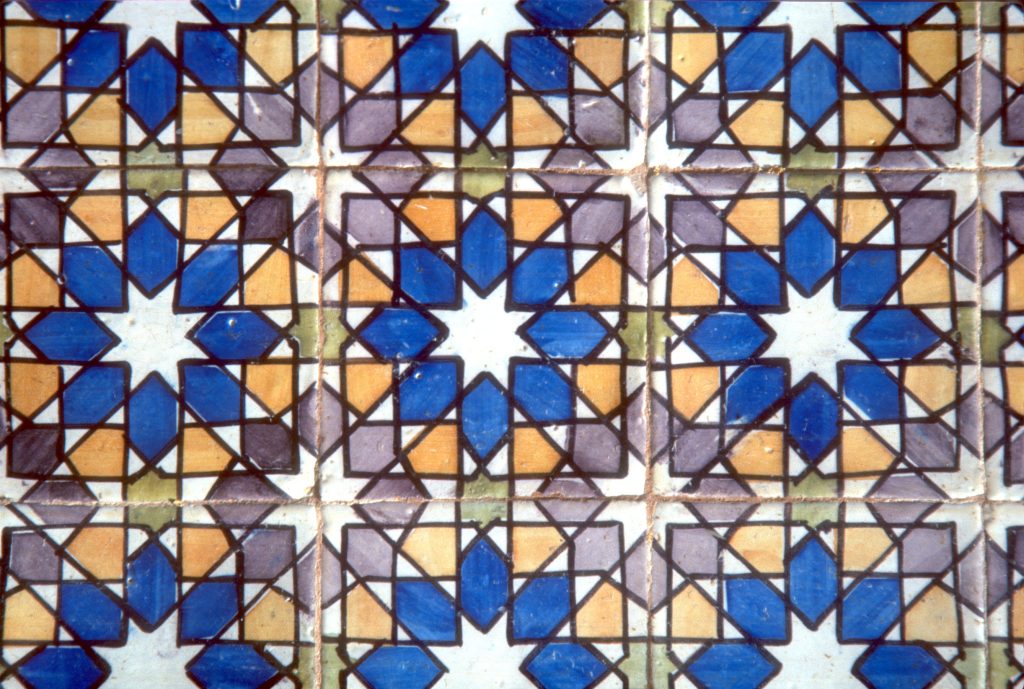
Inside, the palace whispers in many dialects of beauty. The preserved cloister blooms with 16th-century azulejos; the chapel, the monastery’s heart, holds a Renaissance alabaster and black-limestone retable attributed to Nicolau Chanterene, luminous as carved light.
The state rooms are a cabinet of curiosities from an empire of styles: the Arab Room, all trompe-l’œil depth and Neo-Mudéjar ornament; the Great Hall, with stucco theater and gilt sparkle; cozy royal apartments where glass cabinets shimmer with porcelains. Even the kitchens gleam with copper and tile, domestic poetry in metal and glaze.Step back out and color takes the stage: sunlit ochres and reds against alert blue sky. Those eye-popping hues aren’t a modern whim; a 1990s conservation campaign revealed the original palette and returned the façades to their 19th-century bravado. On crystal days you can trace the coast; on veiled ones, towers drift in and out like a fairy tale remembering itself
The Park: A Botanical Romance
Encircling the palace, Parque da Pena is a 200-hectare reverie, winding paths, fern gullies, camellia thickets, and arboreal surprises imported from far afield. Wander to the Chalet of the Countess of Edla, the Alpine-style retreat Ferdinand built with his second wife, Elise Hensler, between 1864 and 1869; then climb to Cruz Alta, the high point with wide-screen views toward Lisbon and the Atlantic. Come in camellia season and the park breathes perfume.
Romantic Escape
Pena is the emblem of a town that turned Romanticism into landscape. Today, carefully managed visitation keeps rooms intimate and gardens restorative. Conservationists monitor tile and stucco; arborists tend century-old collections; curators stage small exhibitions inside the palace. This vigilance is why Pena still reads as dream, an exquisitely maintained one, rather than pastiche. And when the afternoon light slants low across the ramparts, you see exactly what Ferdinand and Eschwege were after: a total work of art, architecture and nature in duet.Give Pena time. Arrive early, follow the terraces in a slow circuit, linger in the chapel, then lose yourself in the park until you reach the wind at Cruz Alta. As the palace’s colors flare through the trees and the ocean flashes on the horizon, you’ll feel it too: a castle that turned a king’s imagination, and an old monastery’s bones, into one of Europe’s great Romantic gestures.
Where to Stay in Sintra, Portugal
Sintra’s compact town center offers the most convenient base for exploring the palaces and gardens. The historic Tivoli Palácio de Seteais, a converted 18th-century palace, sits within walking distance of Palácio da Pena and the town’s main attractions. More modest options like the Penha Lena Sintra or local guesthouses cluster near the train station and main streets, which keeps you close to restaurants and shops while remaining walkable to major sites.
If you prefer quiet surroundings, the hillside neighborhoods above town provide good alternatives. Several small hotels and quinta-style retreats occupy the slopes between Sintra town and Palácio da Pena, offering gardens and views while still being accessible by short walks or local transportation. These places tend to be calmer than the town center, though you’ll rely more on taxis or the local buses to reach some dining options.
For budget-conscious travelers, Sintra has hostels and smaller pensions scattered throughout the center and adjacent neighborhoods. The advantage of staying in town proper is that you can reach most sites on foot and catch the local shuttle buses that run to the more remote palaces like Quinta da Regaleira. The town itself has enough restaurants and shops that you won’t feel stranded in the evening.
Note that Sintra can be crowded during summer months, and good accommodation books up early. If possible, aim for a weekday stay or visit in spring or fall when the crowds thin out and you can explore the palaces with fewer tourists around. The cooler shoulder seasons also make walking the hillside paths to Palácio da Pena more pleasant.
Recommended Reading
Fiction & Literary Atmosphere
- The Maias, Eça de Queirós. A Portuguese classic steeped in 19th-century Lisbon-Sintra society; its mood is pure Romantic Portugal.
- The Book of Disquiet, Fernando Pessoa. Fragmentary, poetic meditations that match Pena’s sense of drifting between reality and dream.
- The City and the Mountains, José Maria de Eça de Queirós. A lyrical exploration of Portugal’s landscapes and contrasts
History, Architecture & Gardens
- Sintra: A Glorious Eden, Gerald Luckhurst. The definitive guide to Sintra’s designed landscapes, including Pena’s park.
- The National Palace, Sintra, José Custódio Vieira da Silva. A richly illustrated guide to the architecture, decoration and history of the 14th-century royal palace in Sintra, Portugal.
- Portuguese Tilework, João Castel-Branco Pereira. Context for the azulejos that grace Pena’s cloisters and halls.
Tours to Consider:
- Sintra Half Day with Pena Palace and Regaleira from Lisbon
- Guided Tour to Sintra, Pena, Regaleira, Cabo da Roca and Cascais