
In Panama City’s Casco Antiguo, one hotel doesn’t just tell the story of a city—it lives it. Step beyond the threshold of Hotel La Compañía, and you’re no longer a guest; you’re an honorary witness to three centuries of history etched in stone, iron, and wood. This is no ordinary boutique stay. This is where the ghosts of Jesuits, the ambition of empire builders, and the echoes of revolution still linger in the arches.
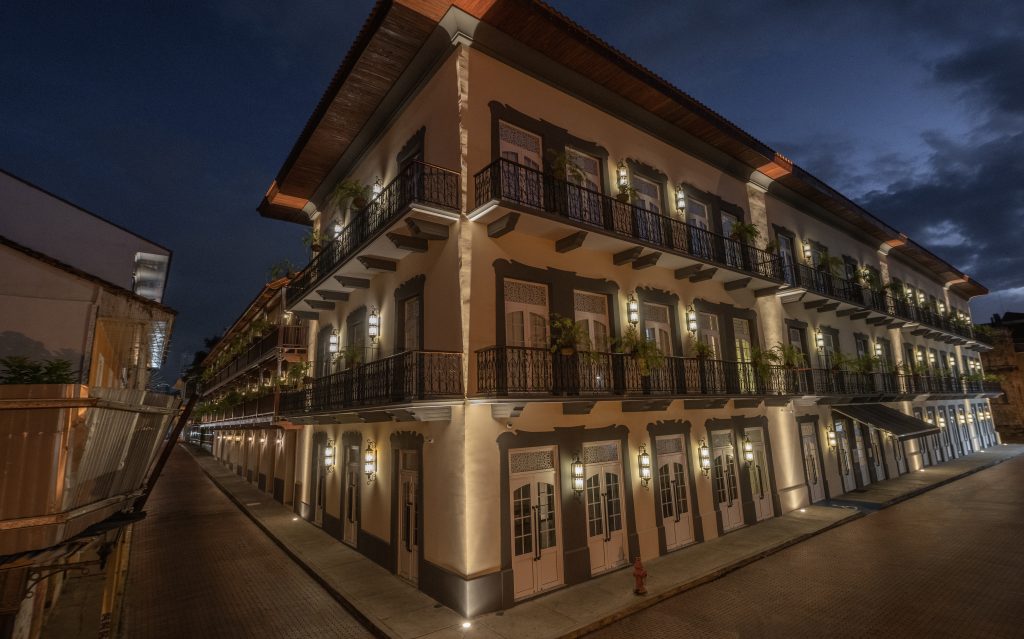
Historical Context
It all began in 1673 when Jesuit missionaries settled in the freshly founded “New Panama City,” determined to anchor their order’s educational and spiritual mission in the New World. By 1688, they had raised the first of the buildings that would one day form the hotel’s Spanish Colonial Wing, their monastery walls built from coral-rich calicanto stone. These cloisters became part of San Javier University, one of the earliest universities in the Americas, a place where the sons of the colonial elite were schooled in faith and philosophy.
In 1739, the Jesuits expanded their domain with a new chapel and adjoining university buildings—today’s French Colonial Wing. Together, the two wings framed a vibrant intellectual and religious hub… until 1767, when King Carlos III’s sweeping decree expelled the Jesuits from the Spanish Empire. Their classrooms fell silent overnight.
The decades that followed brought reinvention and ruin. Earthquakes shook the walls in 1798, leaving the French Wing in partial collapse. Parts of the Spanish Wing found new life as the Nuevo Mundo restaurant and a tavern, later as a gentleman’s club, and eventually the residence of Lady Mallet, founder of Panama’s Red Cross.
In the late 19th century, Muybridge’s lens captured the French Wing’s skeletal remains—weathered stone awaiting purpose—just as French canal builders arrived. They gave the old cloister a new façade and turned its surviving structures into residences, a touch of Paris in the tropics.
Then came 1904, and with it the American Canal era. On the site of former Jesuit land rose the Beaux-Arts edifice that became the American Bazaar department store—its wide arches and cosmopolitan air a reflection of Panama’s new global standing.
Here is a look at each wing today, from its beginnings to its current usage.
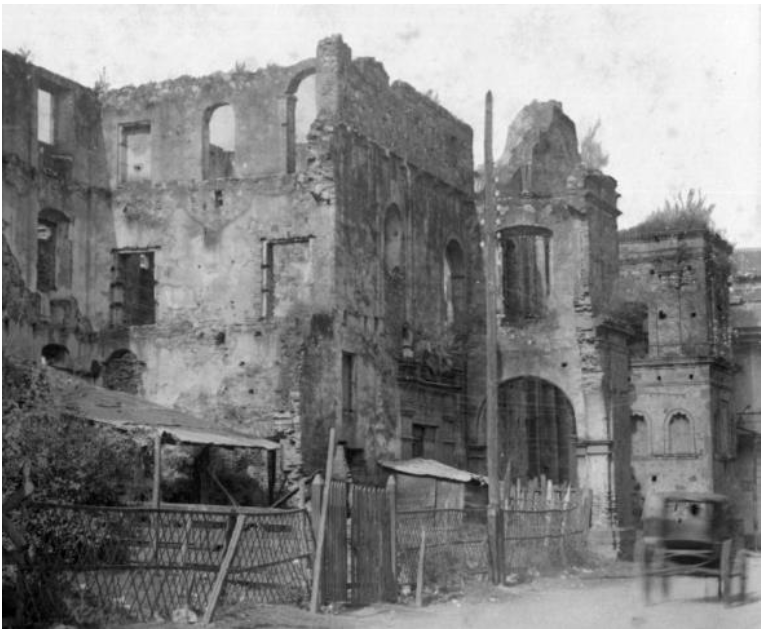
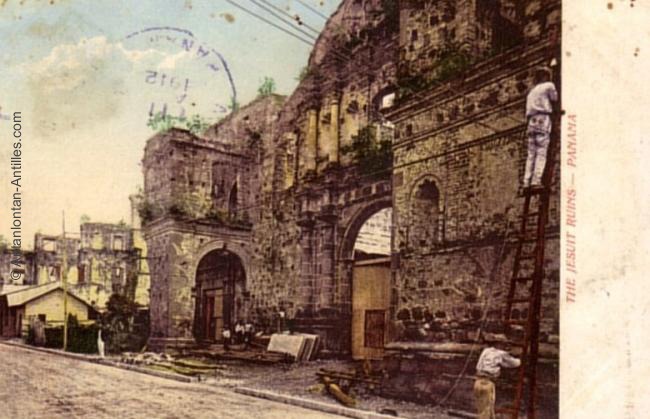
The Spanish Colonial Wing — 1688
Raised by the Jesuits beginning in 1688, this calicanto-walled cloister formed the original spiritual and academic heart of the complex. After the 1767 expulsion, the property shifted to private hands. By 1820 it opened as Hotel Washington, operating until 1870 with a restaurant called Nuevo Mundo (“New World”) and a bar, Corporal Wines and Spirits. Later it served as a gentleman’s club; then Lady Mallet, founder of the Panamanian Red Cross, lived here—her portrait still presides today.
What remains to see. Step into El Santuario, where flickering candlelight warms the cloister’s stone arches and stained-glass colors the air. You’re literally dining inside the monastery’s original fabric, the calicanto walls and vaulted spans intact. The wing also houses two meeting rooms—San Lorenzo and Portobelo—with banquet capacity for roughly 20–40, and upstairs the Wellness Center | Spa & Gym with its adjacent terrace keeps a contemplative spirit alive.
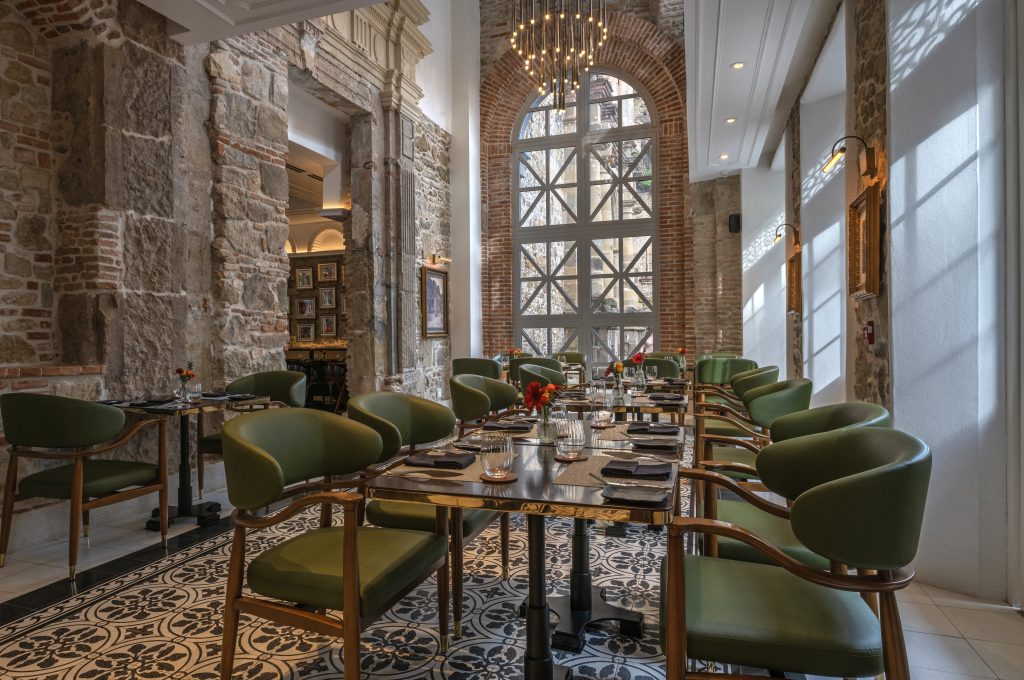
The French Colonial Wing — 1739–1744
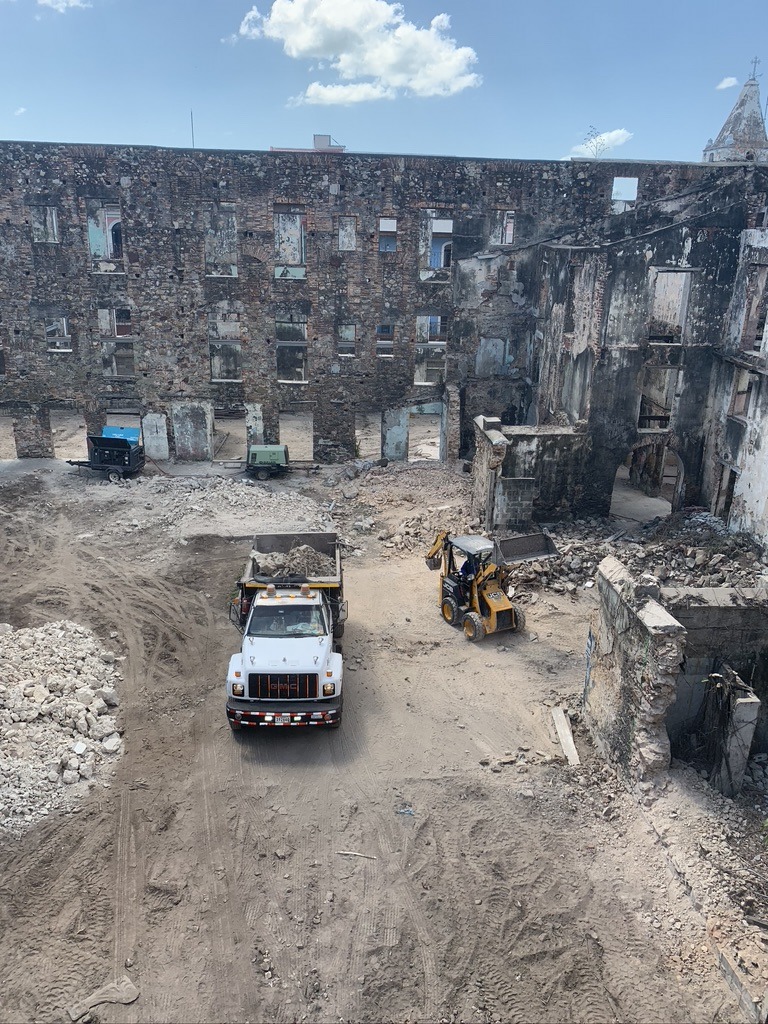
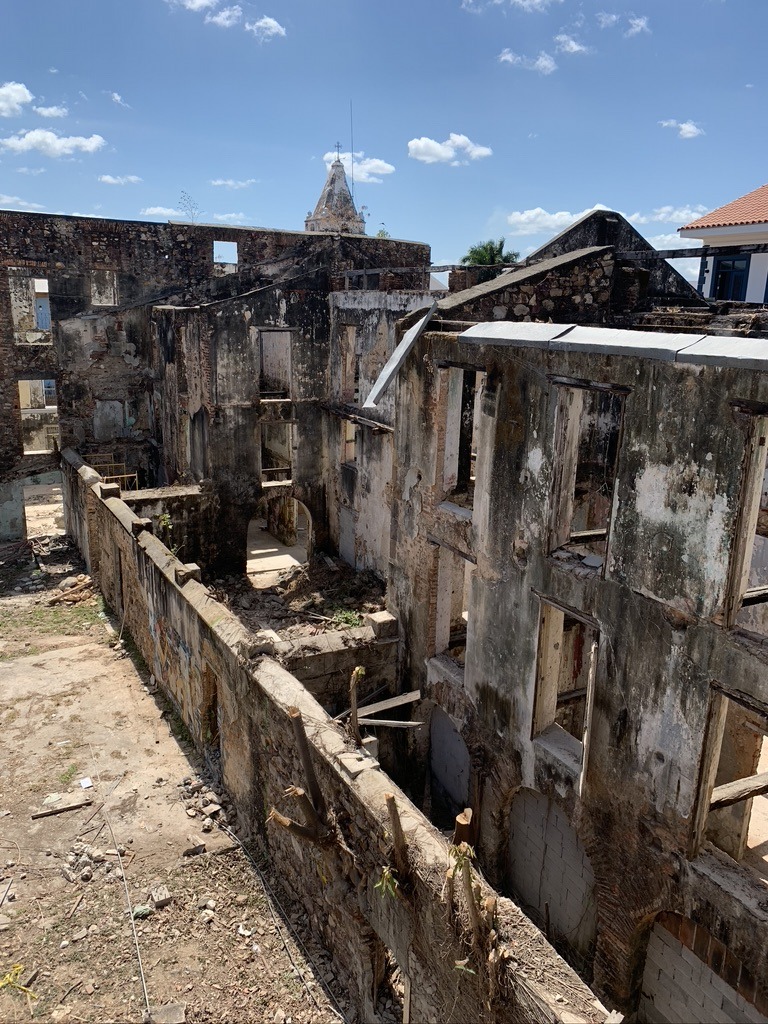
Built 1739–1744 during the late Spanish colonial era to expand the Jesuit educational mission; it included the San Xavier University chapel. After 1767, the complex changed hands; two major fires in Casco followed, and in 1798 an earthquake severely damaged this wing, leaving parts in ruin for nearly a century. When the French Canal vision arrived in the late 19th century, surviving structures were adapted into residences and dressed with the French façade visible today. Eadweard Muybridge’s 1875 photograph—showing the ruin before repurposing—now hangs inside the restaurant here.
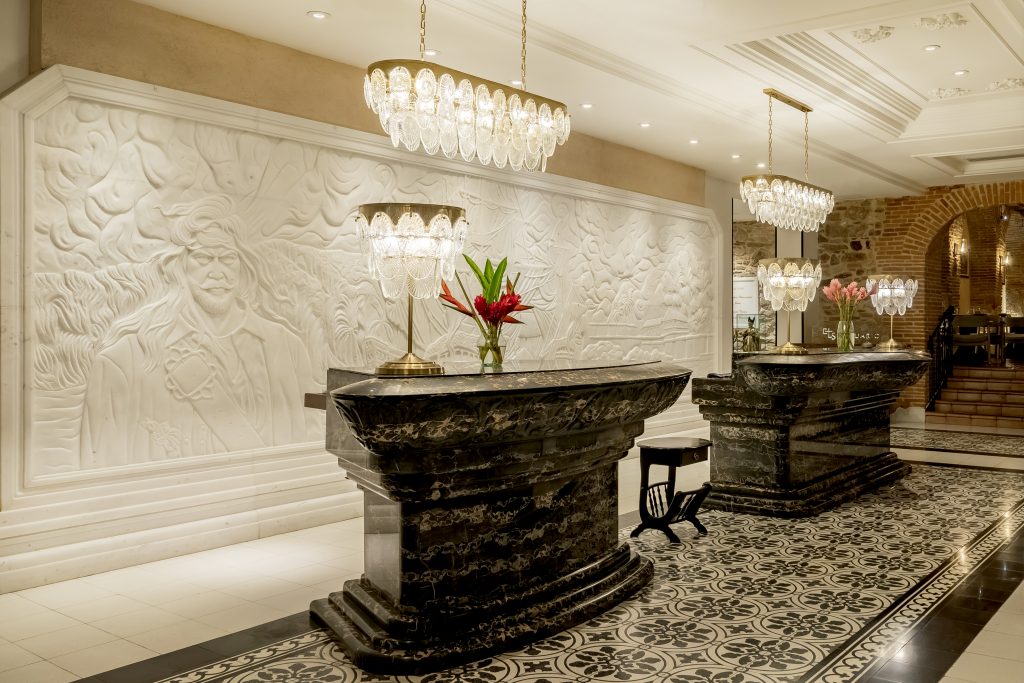
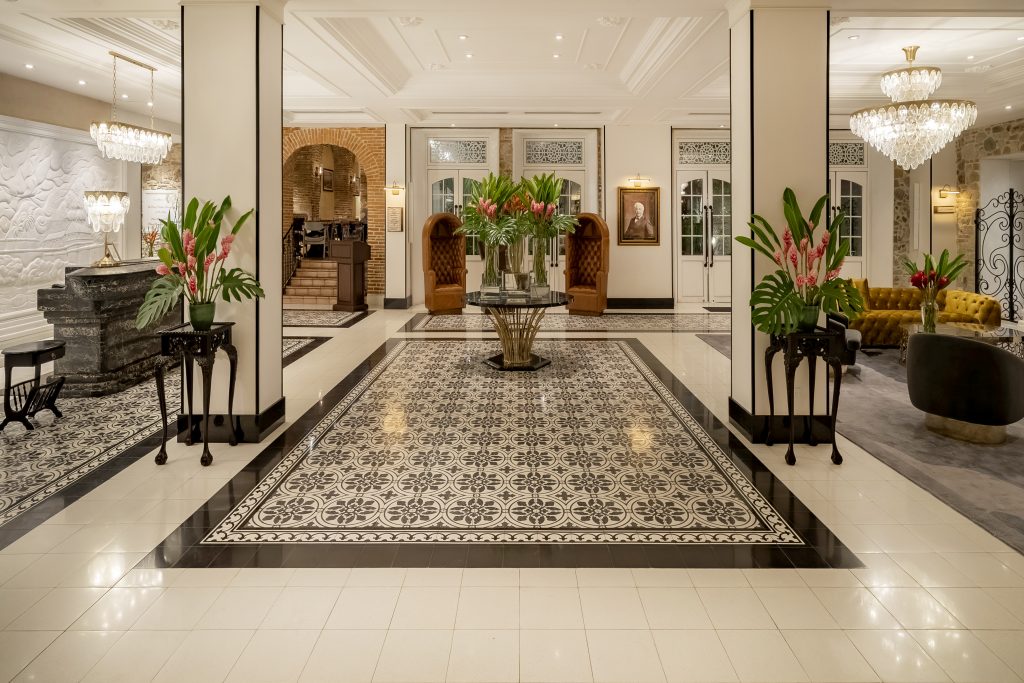
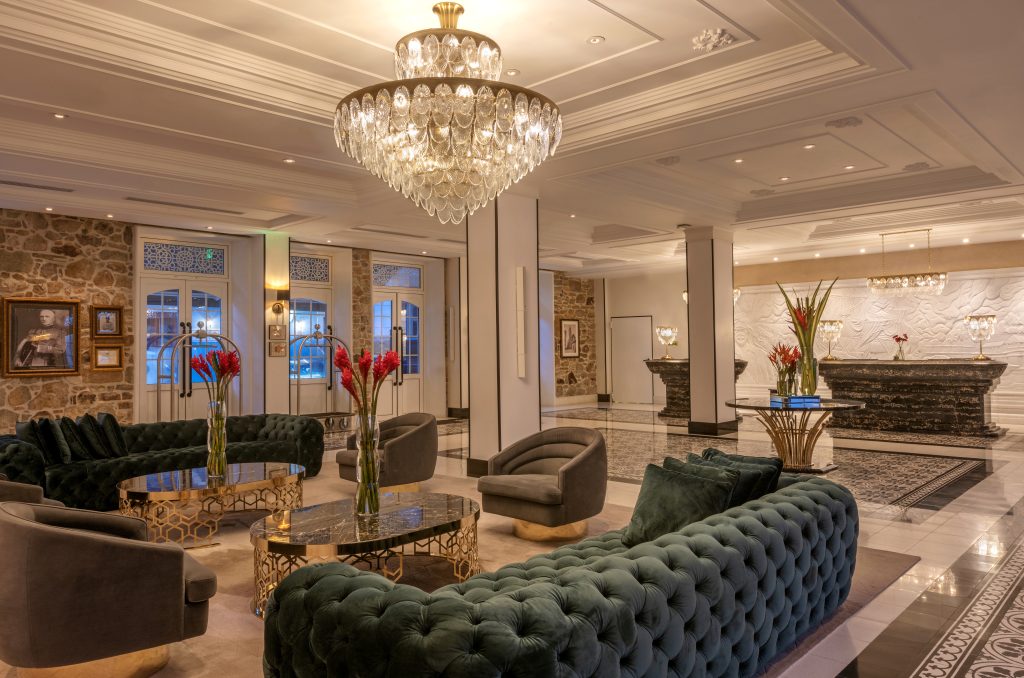
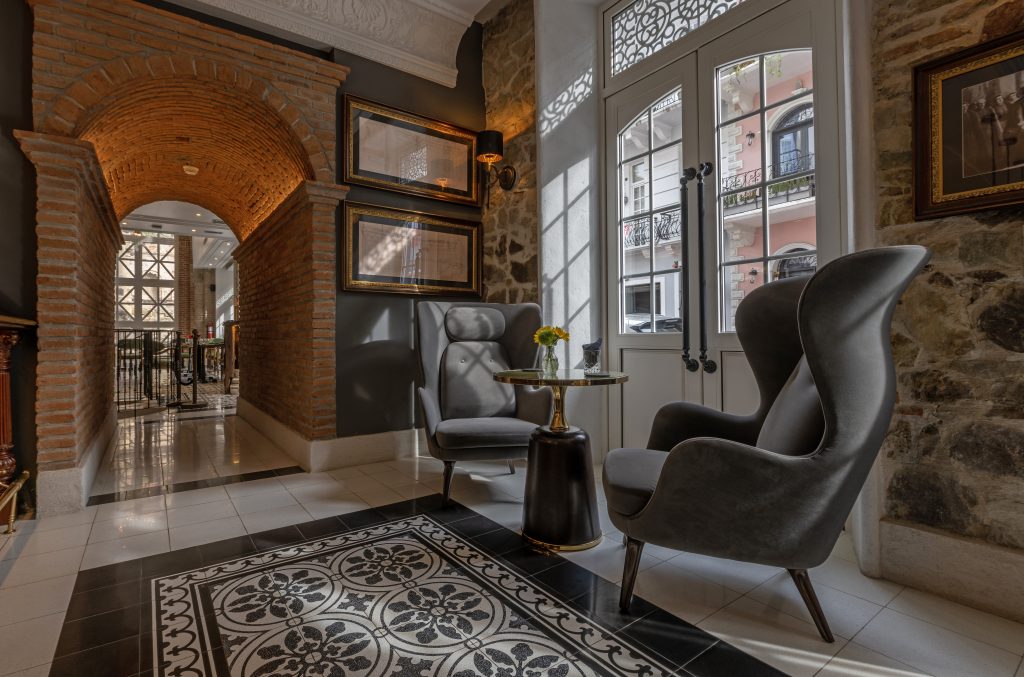
What remains to see. The hotel’s Lobby & Reception anchor this wing, where two white marble murals narrate the property’s history. Just off the lobby, the Exilio Bar references the 1767 royal decree that banished the Jesuits empire-wide—its name a direct nod to the “exile.” The bar of solid mahogany features the carved figureheads corresponding to the five main ships that took the Jesuits back to Toledo in exile. Beneath the bar lies the wine cellar (a collection of 1,800+ bottles from around the world). And in the restored chapel, Restaurant 1739 offers modern French cuisine framed by calicanto walls and that haunting Muybridge image looking back across time.
The American Beaux-Arts Wing — 1904
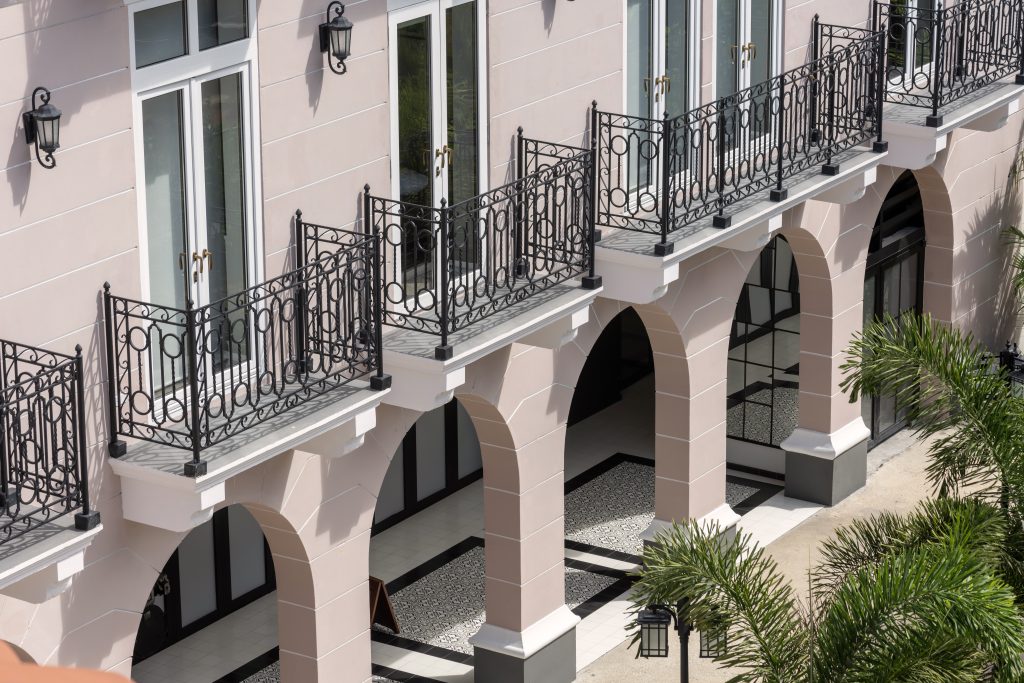
The current structure dates to 1904, speaking the Beaux-Arts language of the American Canal period. On Jesuit-hallowed ground that had evolved through upheaval, commerce arrived in the form of Panama City’s first department store, the American Bazaar—a symbol of modern retail and the city’s new international posture.
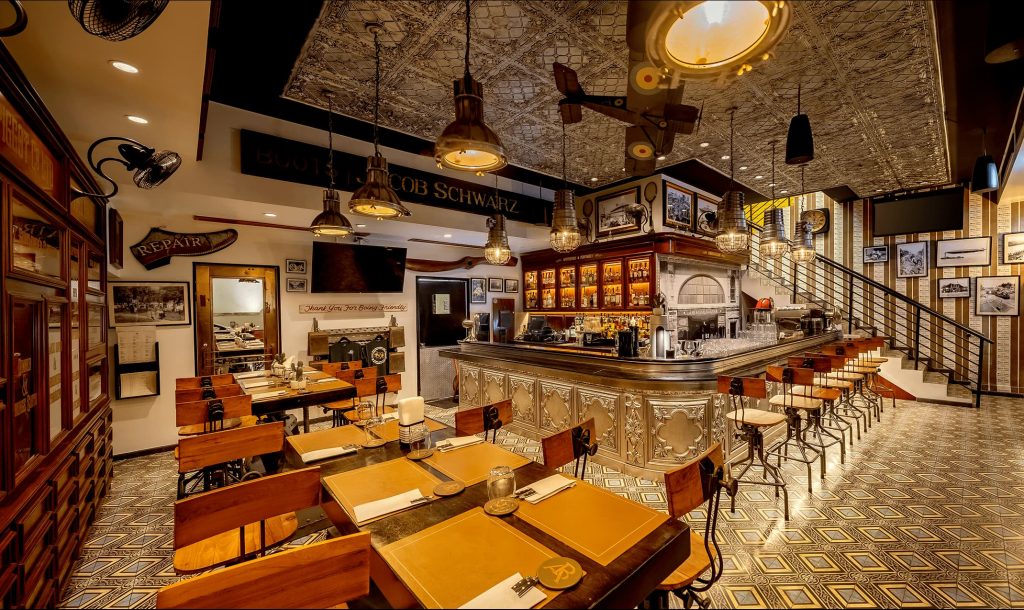
What remains to see. The hotel recreates the department store’s spirit with the American Bazaar restaurant (a tribute in both name and concept, serving shareable American favorites). Alongside it, Luigi’s embraces cucina povera—Italy’s soulful, traditional fare—while Hari’s brings vibrant Nikkei (Peruvian-Japanese) cuisine with design-forward furnishings. Up top, Capella Rooftop pours the 360-degree views. For gatherings, the stately Roosevelt Room and Roosevelt Hall welcome receptions and banquets (capacity ~120), all beneath graceful arches and period lighting.
Restoration & Stewardship
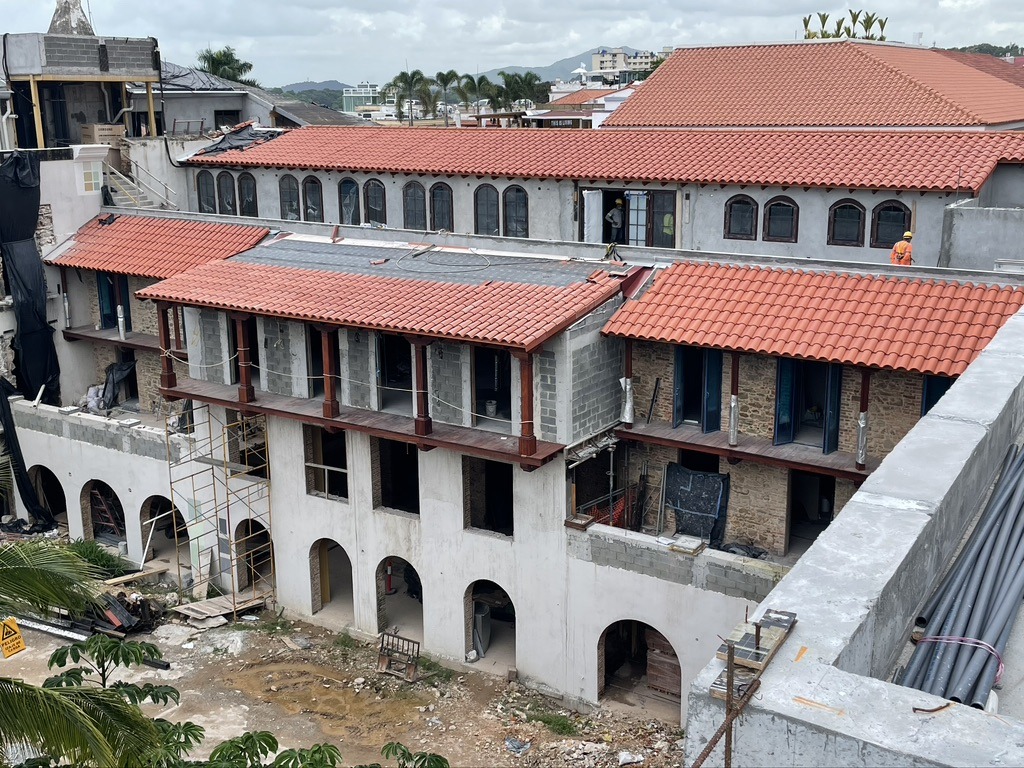
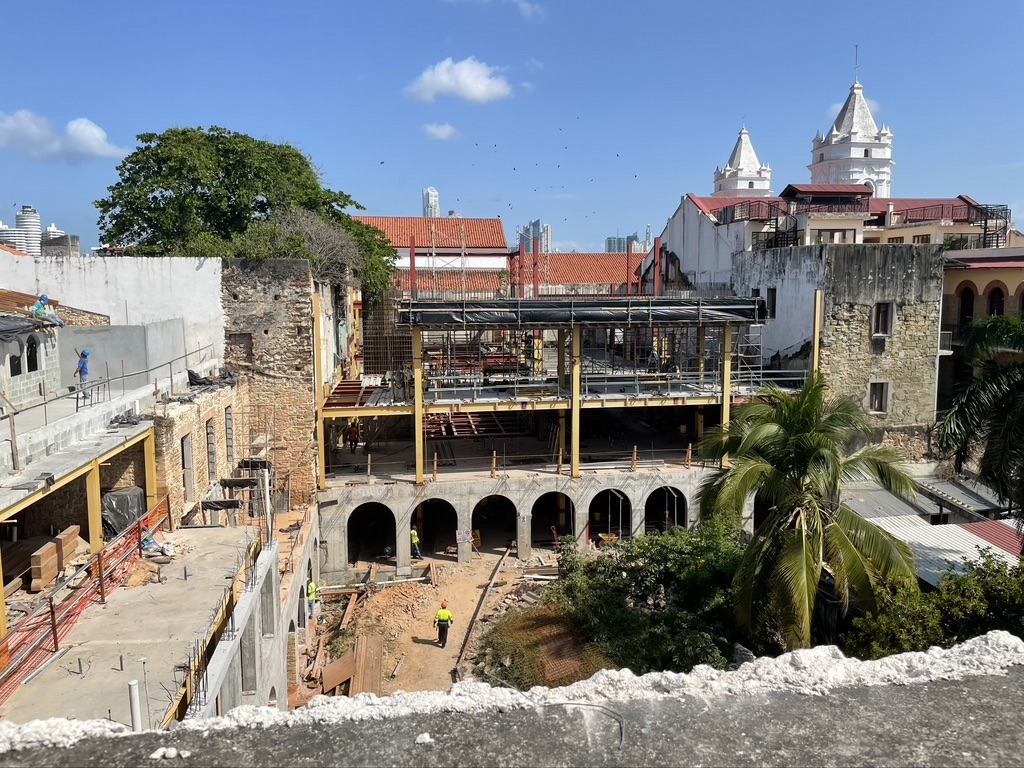
The revival here was painstaking—an eight-year effort led by craftspeople, historians, and preservation architects, spearheaded by owner/founder Christopher Lenz. In the hotel’s own telling, the transformation—tracing the complex’s long arc of reinvention—“took 98 years,” a poetic measure of patience and perseverance brought to its climax in the 21st century. Daily tours and on-site interpretation keep that scholarship alive for guests.
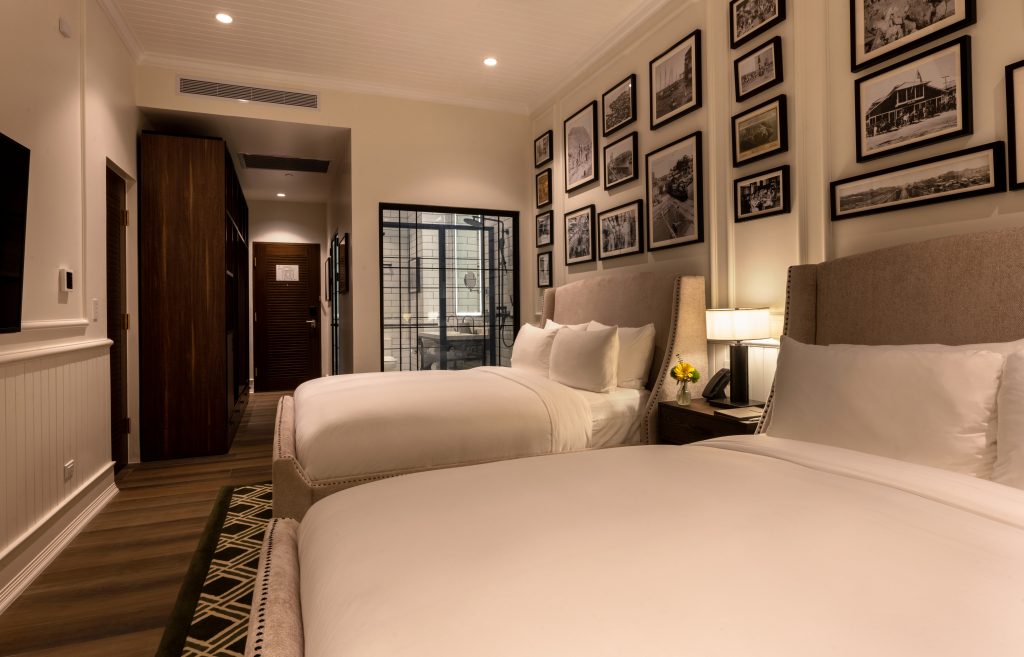
Stepping into the present, Hotel La Compañía unfurls its comforts with the same care it lavishes on its history. Its 88 individually styled rooms echo their respective wings—airy Spanish Colonial chambers with high-beamed ceilings, polished French Colonial salons, and Deco-inflected American suites. Guests enjoy keyless digital entry, touchless check-in, curated minibars, Nespresso machines, and rainfall showers. The rooftop pool and cabanas gaze over Casco Antiguo’s terracotta rooftops; the Wellness Center | Spa & Gym offers botanical treatments and a breezy terrace; and the five distinctive restaurants—from the cloistered elegance of El Santuario to the panoramic Capella Rooftop—ensure the flavors are as global as the building’s history.
Twice daily, complimentary historical tours weave you through courtyards and marble staircases, making it impossible to forget that here, your luxuries rest squarely on centuries-old stone. Guests can join complimentary historical tours daily at 10:00 a.m. and 4:00 p.m., then slip out to UNESCO-listed Casco Antiguo.
Exploring UNESCO-Listed Casco Antiguo
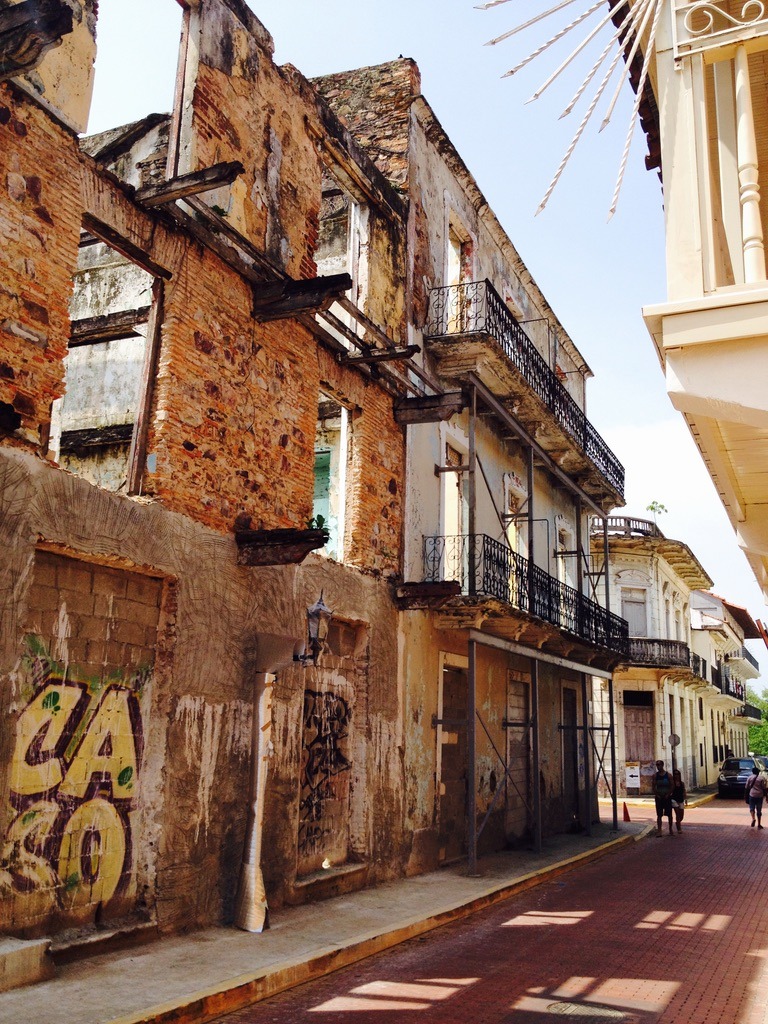
Just outside the hotel’s carved doors lies a district that tells Panama’s story in sunlit plazas and shadowed archways. Designated a UNESCO World Heritage Site in 1997, Casco Antiguo (also known as Casco Viejo) is a tight-knit peninsula of colonial, neoclassical, and Art Deco architecture. You can wander cobblestone streets past the Golden Altar of San José Church—saved from pirate Henry Morgan’s raid—pause at the open-air Jesuit ruins, and browse galleries tucked into 18th-century townhouses. The Metropolitan Cathedral commands Plaza de la Independencia with twin white towers inlaid with mother-of-pearl, while the National Theatre glitters inside with gold leaf and murals. From the Paseo Esteban Huertas, where bougainvillea spills over wrought-iron railings, you’ll have sweeping views of the modern skyline across the bay—a reminder of the centuries that meet here. Cafés hum with live jazz, rooftop bars tilt toward the sea breeze, and every square seems to hide a story waiting to be stepped into.
Some places you tour; others you inhabit. At La Compañía you inhabit history—over breakfast under monastery arches, at twilight with a cocktail named for exile, at dinner in a chapel where a university once sang its liturgy. The walls don’t just tell the story; they lend you a role in it. When you turn out the lamp, you sleep inside the paragraph. Come write your own line.
Where to Stay in Panama City, Panamá
If you’re planning to stay in Casco Antiguo, the historic district itself offers several small hotels and guesthouses within the restored colonial buildings. These properties range from budget-friendly options to mid-range accommodations, and staying here puts you directly amid the narrow streets, plazas, and architecture you came to experience. Many visitors prefer this neighborhood because it eliminates the need for daily transportation to the main sites.
For those seeking more upscale comfort, the nearby neighborhoods of El Cangrejo and Punta Pacifica have established hotels with modern amenities, restaurants, and reliable services. These areas are a short taxi ride from Casco Antiguo, typically ten to fifteen minutes depending on traffic. If you prefer air-conditioning, consistent hot water, and a wider range of dining options outside your hotel, this may be the better choice.
Budget travelers and backpackers will find hostels concentrated in Casco Antiguo itself and in the San Blas area east of the old city. These options are considerably cheaper than hotels and often include helpful staff who know the neighborhood well. The trade-off is shared accommodations and fewer private spaces, but you’ll be among other travelers and close to local bars and restaurants.
Avoid staying in areas like El Chorrillo, Curundu, or Tocumen without specific local guidance, as these neighborhoods are less oriented toward tourism and have higher crime rates than the areas mentioned above. Stick to Casco Antiguo, El Cangrejo, Punta Pacifica, or San Blas if this is your first time in Panama City, and you’ll find reliable transportation, restaurants that cater to visitors, and safer streets at all hours.
Recommended Reading
- David McCullough, The Path Between the Seas — The Canal epic that frames the American Wing’s Beaux-Arts moment.
- Matthew Parker, Panama Fever — The drama of French false starts and American completion.
- Magnus Mörner, The Expulsion of the Jesuits from Latin America — The decree that reshaped these cloisters.
- Marie Arana, Silver, Sword & Stone — Colonial legacies and cultural resilience across Latin America.
- Tom Miller, The Panama Hat Trail— A lively cultural thread through Panama’s markets and makers.
