
Want to know a secret? I just discovered a world-class Japanese garden that’s an easy jaunt for millions of garden-lovers who didn’t think a stroll in Japan was on their weekend-getaway bingo card.
It’s got bridges rivaling Meigetsu-in…

exotic varieties of lotus…

shapely stones in a serene pond with new, breathtaking views around every corner…

and sitting spots that deliver the serene atmosphere of an ancient teahouse.

Except they’re much closer to home.
Come with me, and let’s discover the entertaining wonders at the Missouri Botanical Garden in St. Louis!

No one was more surprised than I to find such an authentic Japanese garden in America’s heartland, complete with chiseled water basins and stone lanterns.

It’s designed according to rigorous Japanese principles and is as beautifully maintained as the most pristine gardens in Japan, even though it’s many times as large.
But there’s more…
A jaunt to Japan isn’t the only exotic and historically significant experience this garden delivers. Founded in 1859, it’s not just a gorgeous landscape, it’s also an historic showcase for rare species, an outdoor art museum that glows at night, and a magnet for scientists studying and contributing to the largest library of plant specimens in the world.

A feast for the eyes, a balm for the heart

There are no better ways to reset your stress level than to walk in a garden or be mesmerized by great works of art. The Missouri Botanical Garden is one of the rare places on earth that lowers your blood pressure instantly by dishing up wow-inspiring examples of both.

Every year, a new artist’s work is featured throughout the 79-acre site—this year, it’s HYBYCOZO’s intricately perforated metal works,

last year it was Chihuly’s iconic blown glass.

The pieces are expertly matched with plantings, so the foliage and flowers highlight the art’s appeal,

and the art draws attention to specimens we might otherwise have walked right past. Even better, the art in the garden isn’t just thought-provoking by day, it’s magical at night.

The botanical garden trifecta that’s nearly impossible to pull off

The world offers plenty of lovely gardens. From the Adachi Museum garden in Shimane, to Filoli in Northern California, so a world-class, soul-restoring stroll is nearly always within reach. But gardens that also qualify as plant museums—displaying living specimens of rare, native, and endangered species, regardless of whether they’d win a beauty contest or not—are seldom as snapshot-worthy as their purely decorative cousins. With their diligent tagging of specimens by scientific name, plantings grouped for teaching moments, and husbandry of vanishing species, the number of botanical gardens that also inspire oohs and aahs every few steps are few and far between.
One visit will show you that the Missouri Botanical garden has found the perfect balance.
For example, consider the Arnold Schwarzenegger of water lilies.

These victoria amazonica are displayed in a reflecting pool that mirrors the dome housing the garden’s tropical rainforest, but they’re more than just another pretty frog perch. These lily pads won the worldwide Water Lily Weigh-Off—the annual global competition for which garden’s lilypads can support the most weight. Guess how much these leaves lifted? Ten pounds? Fifty? Not even close! These ultra-buff Missouri Botanical Garden powerhouses supported 150 pounds before they admitted defeat. That’s not just strong enough for a child to stand on, they’d support a full-grown novelist (even after eating a Ted Drewes sundae every night)!

The time machine giving mankind a second chance
The Missouri Botanical Garden is already on your bucket list if you’re an internationally famous botanist aiming to bring extinct plants back from the dead or the scientist who has named more plants than any woman in history. Every week, its herbarium—the largest library of dried plant specimens in the world—receives shipments of newly-discovered species that are yet to be classified and named.

They’re added to the physical collection and the new digital database that can be studied by scientists working on everything from where invasive species might get their next toehold, to what mix of natives ought to be replanted to speed an ecosystem’s recovery after a wildfire.

And thanks to Henry Shaw’s foresight in 1857 to amass a scientifically preserved collection of plants’ genetic material and their seeds, species that have since gone extinct can still be studied and tapped for their undiscovered nutritional and healing properties. Right now, botanists are working on germinating seeds from the collection that are hundreds of years old, not just bringing them back from extinction, but using them to heal the natural systems that are disrupted without them.
Twenty-three circles of gardener’s heaven

But what if your love of plants runs more to smelling the roses than saving the world? Hello, Kemper Center for Home Gardening! These twenty-three demonstration gardens are a treasure trove of inspiration and how-tos. Whether your burning desire is to attract butterflies,

grow your dinner,

bask in delightful fragrances, return your land to native prairie or just fill in that stubborn dirt patch that never gets any sun, this is the place to get tips on how to do it right.
These highly-educational garden patches are also delightful to behold. You may not have set out to plant a garden that saves the bee population, but after a stroll through the Kemper Demonstration Gardens, your new garage border might accidentally heal the planet too.

And if you play your cards right…

Over Labor Day weekend, the Missouri Botanical Garden doesn’t just deliver a stroll through Old Japan—the garden explodes with color, light and music at the annual three-day Japanese Festival. Swinging lanterns, dancing outside on a warm summer evening, and meeting the titans of sumo wrestling—doesn’t that sound like something you should do at least once in your life?

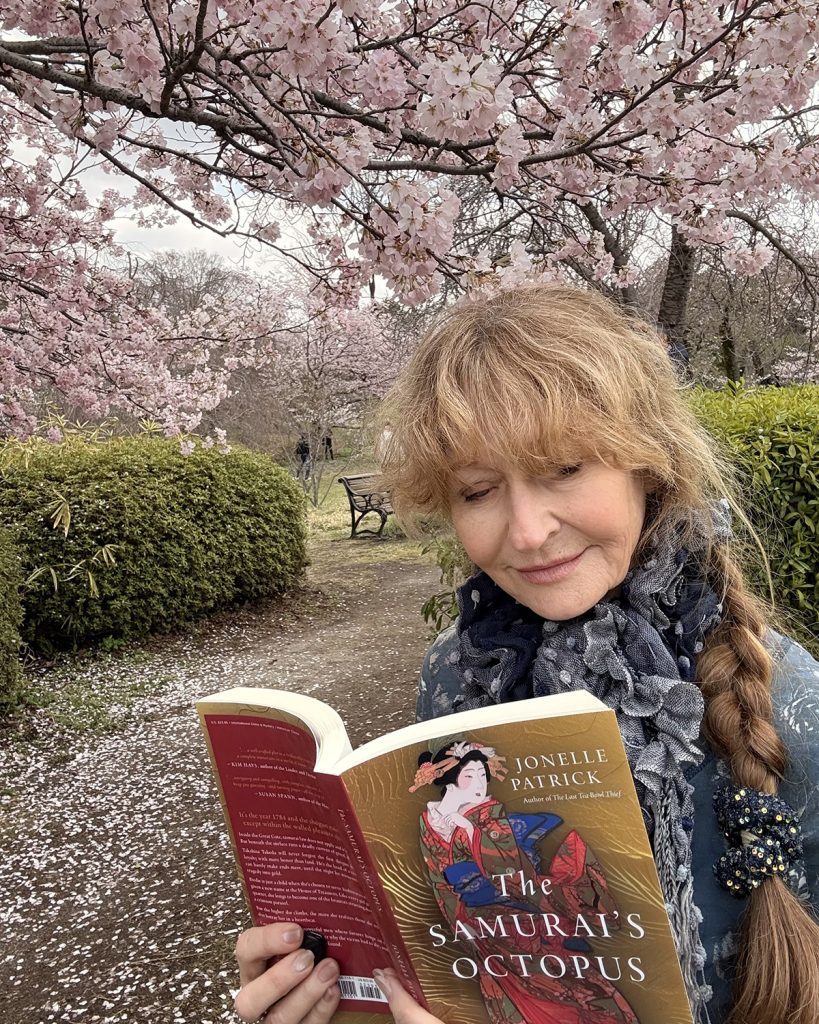
Jonelle Patrick is the author of The Samurai’s Octopus and five other novels. She was awarded a cultural visa by the Japanese government for writing about Japan, and regularly contributes to Japanagram, The Tokyo Guide I Wish I’d Had, and Only In Japan. A graduate of Stanford University and the Sendagaya Japanese Language Institute, she’s a member of the Mystery Writers of America, International Thriller Writers, Sisters in Crime, and the Historical Novel Society. She lives in Tokyo and San Francisco.

Missouri Botanical Garden Recommended Reading
Fiction
- The Secret Garden by Frances Hodgson Burnett, illustrated by Tasha Tudor
The classic childhood story of two lonely children who discover a neglected secret garden, their friendship and health blossoming along with the plants they begin to nurture. - The Samurai’s Octopus by Jonelle Patrick
The Samurai’s Octopus whisks you from the paths of the Missouri Botanical Garden’s stunning Japanese landscape to mingling with the flamboyant flowers of the Yoshiwara pleasure quarter, where a young courtesan’s apprentice must solve a murder that happened before she was born to unravel the secret of her own birth. (This is the book that brought this article’s author to speak in St. Louis, where she discovered the wonders of this garden.)
Nonfiction
- The Botanic Garden by Ambra Edwards
An exploration in words and pictures of the most magnificent botanic gardens around the world, and what makes them great. - Missouri Botanical Garden: Green for 150 years by Elizabeth McNulty
A history of the oldest botanical garden in the United States (and one of the few to be awarded National Landmark status, illustrated with more than 400 photographs. - Missouri Botanical Garden by Todd E. Styles
The Images of America history of the garden, with vintage photos and interesting anecdotes about founder Henry Shaw and other historic figures who contributed to the growth, mission and beauty of the garden. - Authentic Japanese Gardens by Yoko Kawaguchi
Illustrated with 150 photos, this book explains how Japanese gardens are designed, from the philosophy behind them to hands-on how-tos. - Gardening Journey Through Missouri: A month-by-month guide to growing in the last frontier by Charlene Steve
A hands-on companion guide to the Kemper Center for Home Gardening detailing the microclimates and growing conditions all over Missouri, and recommending plants suited for each.
Photo Credits: Kent Burgess, Nathan Qwarta, Jonelle Patrick, John Evans, Lou Olson, Tom Incrocci, Sundos Schneider, Claire Cohen, Margaret Schmidt, Robert Schmidt, Robin Pagano, and Kelly Cato.
