
By Jan Foster
Nestled on the dramatic North-East coast of England, Tynemouth is a gem steeped in drama. It’s one of many Northumbrian coastal towns which, for the greater part of English history, you might say represented the conflicted past of the rulers. The evocative ruins of Tynemouth Priory and Castle dominate the town’s skyline, on a raised promontory with dangerous rocks and a small beach below.
For research, I recently had the pleasure of visiting this charming coastal town, and, no matter what the weather, you too might leave with a sense of wonder at its rich and sometimes turbulent past.
Tynemouth Priory: A Fortress of Faith and Power
As I stood among the weathered stones of the priory, it was easy to imagine the monks in quiet prayer, the solemn processions to King Oswin’s tomb, and the clatter of armour during times of siege. The blend of sacred reverence and military utility makes Tynemouth Priory not quite unique among England’s monastic ruins, but certainly one of the more impressive due to its location and picturesque views.
The story of Tynemouth begins long before the crumbling stonework of the priory was left open to the raging sea winds. The site, placed at the mouth of the River Tyne (thus the town’s name), has been occupied since the 7th century, when a monastery was first founded here. It grew into one of the most important religious centres in the north of England.
The priory was the burial place of three kings: Oswin of Deira, Osred II of Northumbria, and Malcolm III of Scotland. These sacred associations gave the priory significant spiritual importance, and it drew pilgrims for centuries. King Oswin, a Northumbrian ruler martyred in 651 AD, whose body was brought to Tynemouth and interred at the priory, eventually earning sainthood.
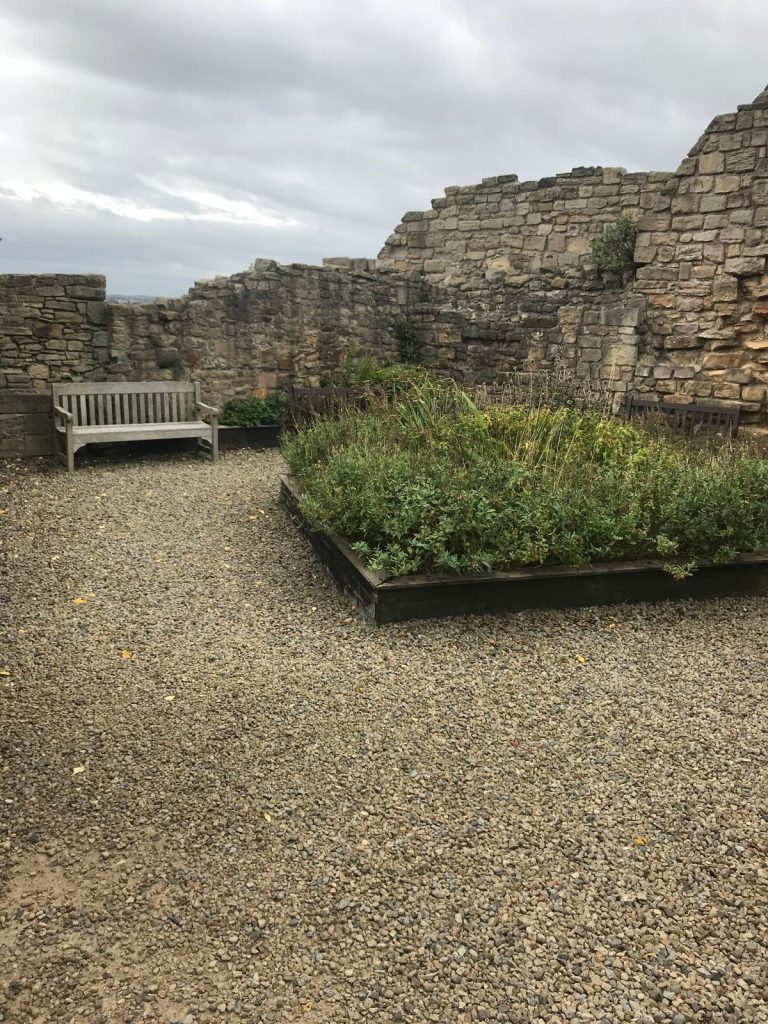
By the 11th century, after a Viking raid and a period of abandonment, the site was re-founded as a Benedictine priory by monks from St Albans. The lives of these monks were arduous and disciplined. They followed the Rule of St. Benedict, engaging in daily prayer, study, and labour. Overlooking the sea, they would have heard the cries of gulls and the crash of waves as they copied manuscripts by candlelight or tended to the sick in the priory infirmary, using the herbs grown in the small garden to the left of the infirmary entrance, a semblance of which has been restored for today’s visitor.
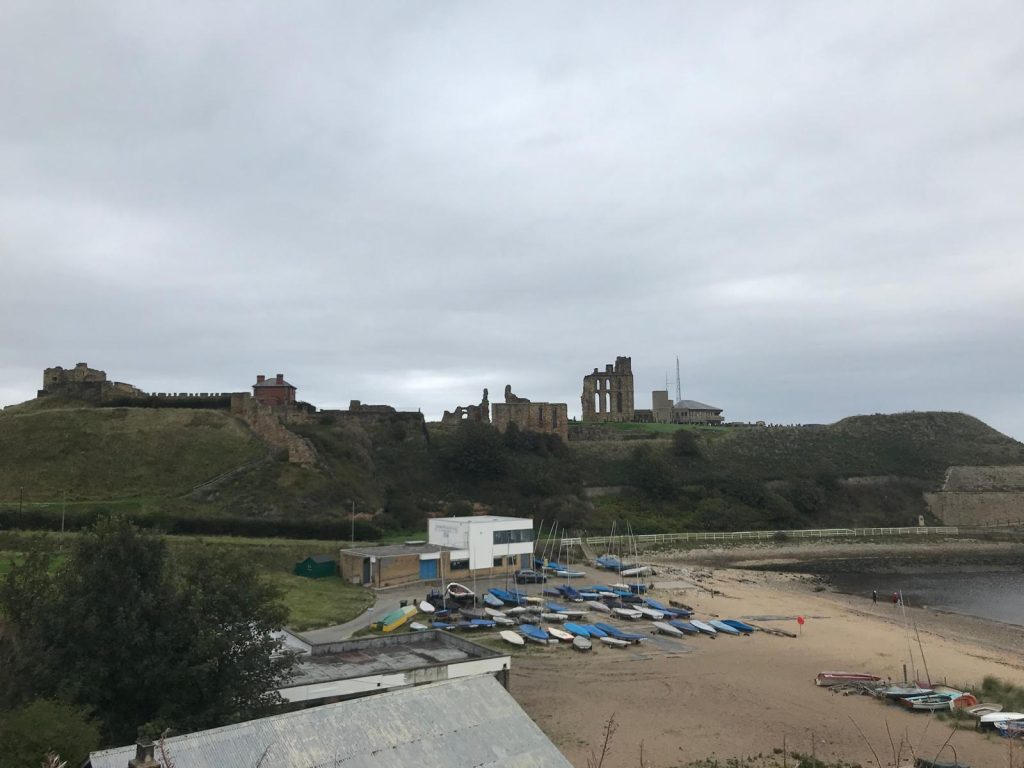
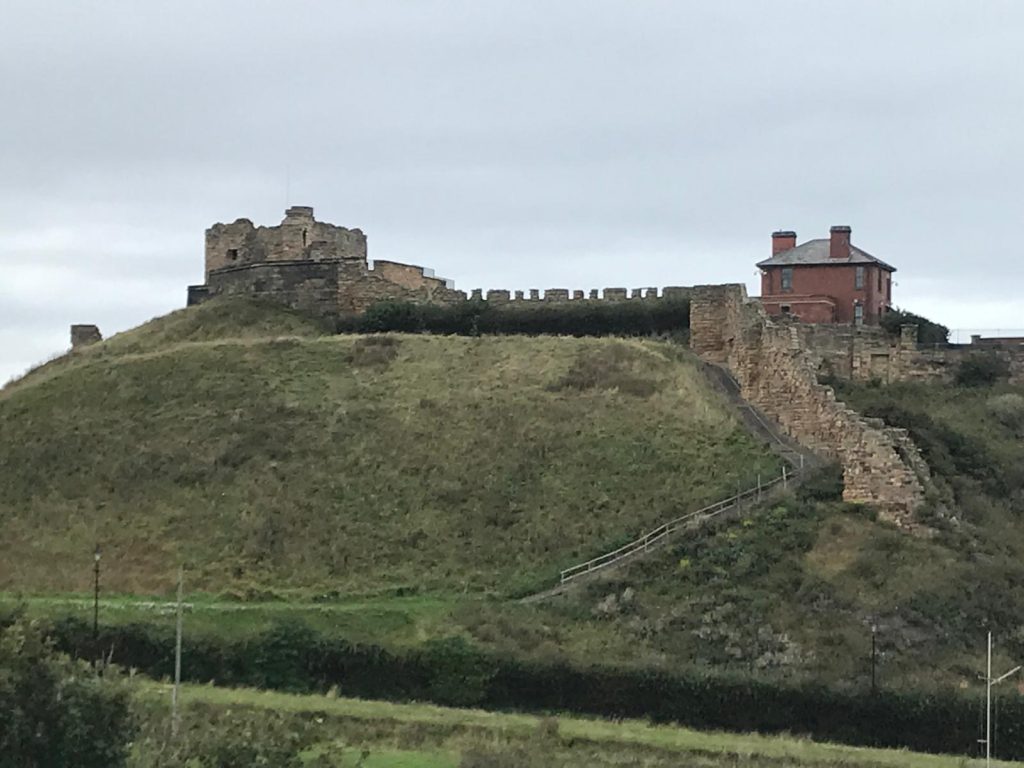
During its medieval heyday, the priory not only served religious functions but also acted as a fortress. Its strategic position at the mouth of the River Tyne, as busy trade route, made it crucial in the coastal defence of England. However, by the time of the Valor Ecclesiasticus (a survey ordered by Henry VIII in 1535 to assess the value of monastic institutions), records indicate that there were only 15 Benedictine monks living at Tynemouth Priory, although there was also a garrison of 20 soldiers who ‘guarded’ the monks and town. This number of monks would have included the Prior (the head of the priory), with the others taking on roles such as sacrist, infirmarian, cellarer, and other typical monastic offices. They also educated some of the town’s boys and novices, but they did not, as it might at first appear, found the nearby King’s School, which was established by the Victorians.
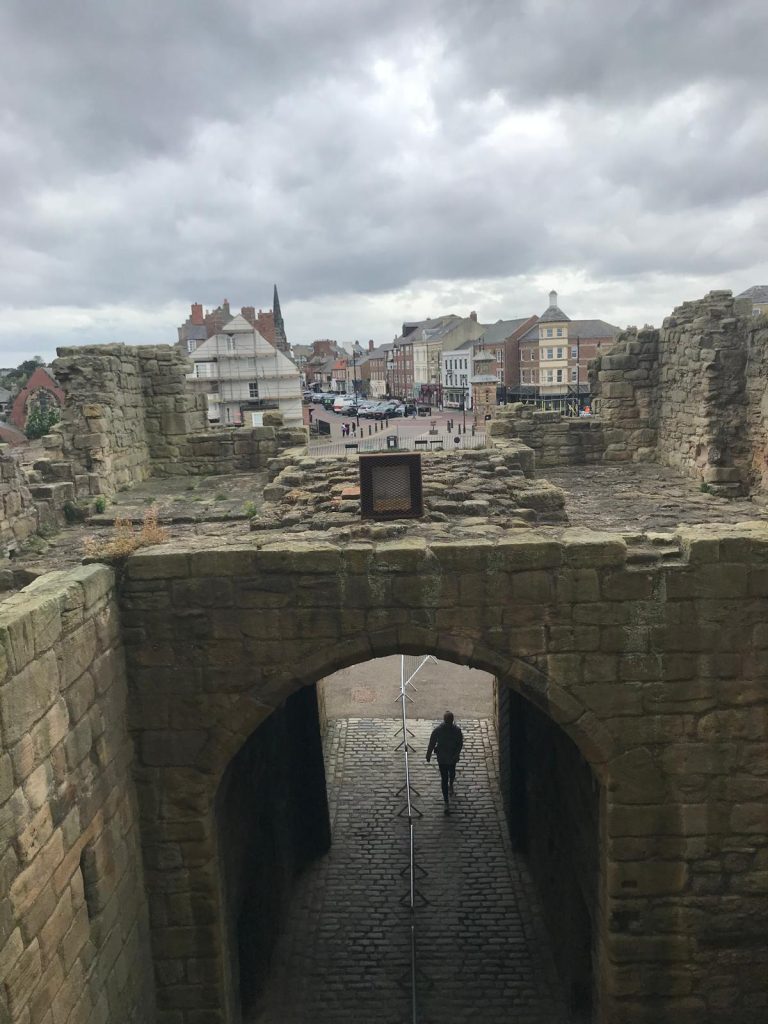
A high, fortifying wall encloses the Priory site. The remains of the church are an evocative reminder of the dissolution of the monasteries, standing almost alone in the centre of the complex, while other buildings are outlined by the remains of their foundations. To enter the site, even today, you have to walk through the huge gatehouse. As you walk around, you quickly realise – the walls were essential, not just for fortification, but also protection from the howling winds, referenced by several monks living there as a reason they didn’t like the assignment.
Later, during the Napoleonic Wars and even through the two World Wars, the site saw military use, with gun emplacements added to defend against foreign invasion.
A Town of Character and Notable Residents
If you want to get a sense of that strategic importance, leave the Priory and walk along the headland towards the river. You can see the docks along the riverside, and easily imagine the passage of boats up and down the Tyne. In the shadow of the Priory, to either side of the huge rock it sits upon, there are small beaches, next to the deadliest of hull-breaking at the base of the promontory. Many ships fell a-foul of the tidal current which makes entry into the Tyne difficult, a natural defence against invaders, and were pushed against these rocks before sinking.
Beyond the priory, Tynemouth as a town is rich with maritime heritage and Victorian charm. It became a fashionable resort in the 19th century, drawing city dwellers to its clean air, golden beaches, and saltwater baths.
One of the most famous sons of Tynemouth is Algirdas Julien Greimas, a Lithuanian-French semiotician who lived briefly in the town. Though not a household name, his work had a significant impact on modern linguistic theory. Another notable figure associated with the area is Robert Westall, author of The Machine Gunners, who was born in nearby North Shields but often wrote about the North East coast.

Yet Tynemouth’s real historical impact lies in its connections to English history and seafaring trade. Its strategic position meant it played a role in defending the Tyne during times of war, and its fishermen and merchants have long contributed to the economy of the region.
Echoes of the Past and the Present
Today, Tynemouth continues to embrace its past. The priory is maintained by English Heritage and offers a rich experience for visitors, with interactive exhibits, panoramic views, and events that bring the history to life. And just steps away, Tynemouth’s bustling market and charming cafes offer modern pleasures in a setting brimming with ancient stories.
Very much in the present, if you find yourself in need of refreshment with a view run by local independent businesses, I recommend Mister Woods Coffee, with sweeping views of the Priory and the coastline. Also, Crusoe’s (located on the beach) has a terrace and deck chairs and is dog friendly.
The North East of England, and especially Tynemouth, is famous for its fishing trade, so you could sample kippers or oysters at Riley’s Fish Shack on Kind Edward’s Bay, recently crowned one of the UK’s best beach cafés and run by a husband and wife team.
I should also mention, the golden sandy beaches of the Northumbrian coast, in the right weather, rival those of the continent! You might even spot dolphins off the shoreline!
Further Reading: Books Featuring Tynemouth
For those inspired to dive deeper into the story of Tynemouth, here are a few books that bring its spirit and history to life:
- Disrupting Destiny by Jan Foster: A gripping historical fantasy that features Tynemouth and seamlessly weaves historical detail with a thrilling narrative. Foster’s vivid descriptions bring the priory and the town’s past to life in a way that is both imaginative and rooted in historical truth
- The Machine Gunners by Robert Westall: Though set in nearby Tyneside during World War II, this book captures the spirit and resilience of communities like Tynemouth during times of conflict.
- Tynemouth Priory and Castle (English Heritage Guidebooks): A comprehensive guide for visitors and history enthusiasts that provides context, timelines, and insight into the priory’s complex past.
- The Northumbrians: North-East England and Its People by Dan Jackson: A broader look at the cultural and historical forces that shaped Northumberland and Tynemouth alike.
Tynemouth is more than a coastal escape, it’s a living tapestry of English history. Whether you’re standing next to the priory walls looking out to sea or strolling through the town’s cobbled streets, you’ll feel the enduring heartbeat of a place where the past and present merge.
About the Author: Jan Foster

Jan (writing as J.H. Foster for historical fiction and Jan Foster for historical fantasy) is based in the North West of England and tries to drag her family and dogs out into the wilds or into windswept castles as much as possible – when it’s not raining! Only slightly obsessed with Vikings and Tudors, Jan thoroughly enjoys research trips and burying her head in books to flesh out the details of these time periods in her novels. That’s her excuse and she is sticking to it!
Jan has published many books since starting to write when her children spent more time in school than at home, and is often invited to speak about being an Indie Author. Her Naturae Series of Historical Fantasy weaves historical events in the Viking and Tudor age with magical realism fae, vampires and witches. Recently, she has launched a WW2 French Resistance series, including a middle grade book, under the Rebels and Resistance Series.You can follow what Jan is up to on social media @janfosterauthor or check out her website for more details on publications and other articles or short stories she’s written www.escapeintoatale.com




Where to Stay in Tynemouth, United Kingdom
Tynemouth offers several comfortable lodging options within walking distance of the priory and seafront. The town center has a selection of hotels and guesthouses ranging from three-star properties to smaller bed-and-breakfasts, many housed in Victorian buildings that reflect the area’s heritage. These accommodations typically include modern amenities while maintaining the character of the North East coastal setting. Staying in the town center puts you near restaurants, shops, and the metro station for easy access to Newcastle.
If you prefer quieter surroundings, the residential streets leading up to the priory feature several guesthouses and small inns. This area provides direct access to the clifftop walks and the priory ruins without the bustle of the town center, though you will need to walk or take transport into the main commercial area for dining and shopping. The proximity to the priory makes this option ideal if historical exploration is your priority.
For budget-conscious travelers, Tynemouth has hostels and vacation rental apartments available through standard booking platforms. These options offer flexibility and often better value than traditional hotels, particularly for longer stays. The town’s compact size means most accommodations are within fifteen to twenty minutes of the main attractions on foot.
The nearby suburb of Cullercoats, just south of Tynemouth, provides additional hotel and guesthouse choices in a slightly more residential setting. This area is still close to Tynemouth’s attractions via local transport or a pleasant coastal walk, and it offers access to Cullercoats Bay’s beaches and Victorian promenade architecture.
